

Astrodevice Sony E-Mount to Celestron RASA 8 Adapter
Ships by Next Business Day
Contiguous US Customers:
All items we sell ship for free within the Contiguous US. Shipping will be via the cheapest shipping method which will vary depending on the items in your order. During checkout, you may also be shown other optional faster shipping choices.
US Customers in Hawaii and Alaska:
Free shipping applies to almost all products. A few large telescopes and mounts are excluded from this free shipping offer. For these items, please contact us to obtain a shipping quote before you check out using the online shopping cart.
International Customers:
Free shipping does not apply to international orders. During check-out, you will be presented with several shipping choices and costs. However, the export of some items may be restricted outside the US due to size or manufacturer restrictions.
Please note that this is a 3d printed plastic part.
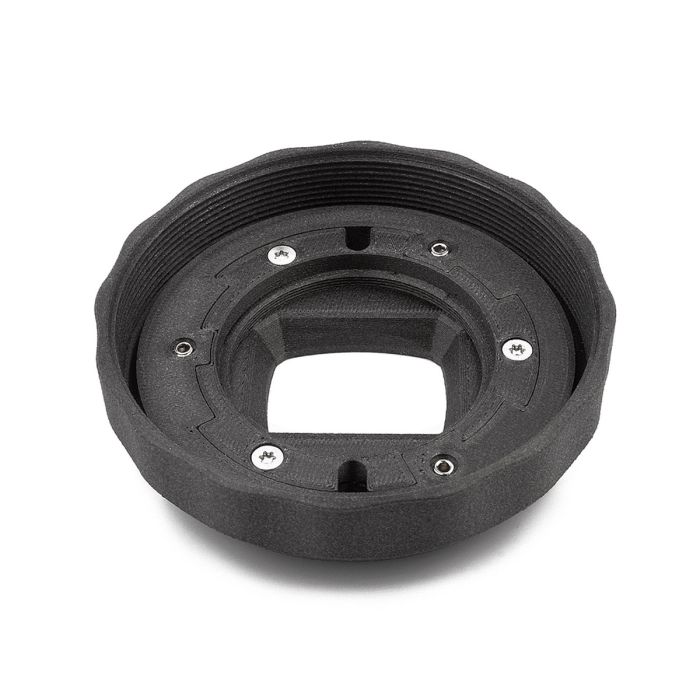
Adapter allowing you to connect SONY E-mount mirrorless cameras to Celestron RASA 8 telescope.
If you use a Sony mirrorless camera (e.g. A7-III) you probably know how difficult it is to attach it to a RASA 8 telescope. To some it seems simply impossible for three different reasons. First, the RASA 8 telescope has a very short backfocus – the sensor must be 28.73 mm from the front of the telescope. The telescope doesn’t leave much room for connection. Secondly, the camera sensor is large and placed very close to the front edge of the instrument. Third, the camera housing leaves almost no room for the wide cap that the telescope requires.
However, it turns out that clever geometry can solve this difficult connection problem. I’ve created an Astrodevice adapter that not only allows you to connect your mirrorless Sony to the RASA 8, but also allows you to screw in a 2″ filter, giving you a full-fledged set up for astrophotography work. In addition, the adapter is equipped with a special key that allows you to easily attach and remove the accessory from the camera.
After connecting to the camera’s bayonet connector, the whole thing is screwed onto the telescope using the built-in large nut with M87 thread. The device has an internal thread allowing to mount a 2″ filter.
The adapter is equipped with a Front Tilting Mechanism that allows you to adjust the tilt of the sensor. A special 0.6mm washer is included, which, in addition to working with the sensor tilt adjustment system, also allows for possible extra backfocus tuning.
To use the adapter you don’t have to calibrate anything – there are no adjustment screws and all you have to do is unscrew original glass window from front of the telescope. If you use a filter, it is recommended by the telescope’s manufacturer anyway. For those who would like to photograph in the fullest spectrum of light, it is recommended to put on a regular 2″ UV/IR filter.
The device is also equipped with a unique system that, as far as I know, is used exclusively by Astrodevice. It’s a Front Tilting Mechanism that allows you to adjust the tilt of the sensor from the side of the telescope. If you find that the shape of the stars is non-uniform, you can make the appropriate adjustment, as is the case with dedicated cooled cameras for astrophotography equipped with large size sensors.
The base of the product are 3D printed elements made of PET-G CF filament (polyethylene terephthalate glycol-modified reinforced with carbon fiber). The technological dimensional tolerance is 0.1 mm.
Note: In the sensor tilt adjustment mode, when working with the attached washer, the outer diameter of the 2″ filter housing must not exceed 50.7 mm.
Going full-frame with RASA 8
The RASA 8 telescope was designed to guarantee ideal image quality up to APS-C format. Full-frame sensors are much larger than this. Therefore, when using full-frame cameras, you can expect vignetting of varying geometries, depending among other things on the design of the camera itself. For example in Canon Ra cameras dedicated to astrophotography the vignetting takes on quite a classical shape but from the top and bottom an even, linear, darker framing is visible. Similarly, vignetting will occur in cooperation with other full-frame cameras (e.g. Sony). This is quite normal, but it is good to know what you should expect. These darker areas can be corrected to some extent with flat frames and the remaining imperfections can be removed in post-processing, possibly by cropping the image to a slightly smaller format. This edge processing will also help to deal with the optical imperfections that appear when working with large sensors and small backfocus.
In summary, full frame photography is entirely possible with the RASA 8. In case of Canon cameras with RF mount, all you need is an Astrodevice adapter.
Here's some additional information you might want to review before making a purchase:
| Product Banner Type | sale |
|---|---|
| Free Shipping Graphic | Free US Shipping |
| Hide Found a better Shipped Price on Frontend? | No |
Please note that this is a 3d printed plastic part.
Adapter allowing you to connect SONY E-mount mirrorless cameras to Celestron RASA 8 telescope.
If you use a Sony mirrorless camera (e.g. A7-III) you probably know how difficult it is to attach it to a RASA 8 telescope. To some it seems simply impossible for three different reasons. First, the RASA 8 telescope has a very short backfocus – the sensor must be 28.73 mm from the front of the telescope. The telescope doesn’t leave much room for connection. Secondly, the camera sensor is large and placed very close to the front edge of the instrument. Third, the camera housing leaves almost no room for the wide cap that the telescope requires.
However, it turns out that clever geometry can solve this difficult connection problem. I’ve created an Astrodevice adapter that not only allows you to connect your mirrorless Sony to the RASA 8, but also allows you to screw in a 2″ filter, giving you a full-fledged set up for astrophotography work. In addition, the adapter is equipped with a special key that allows you to easily attach and remove the accessory from the camera.
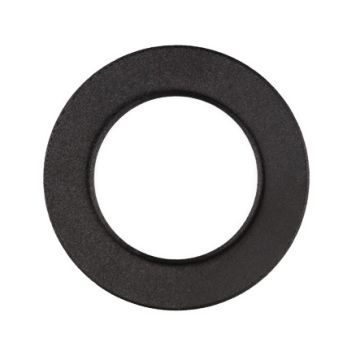
After connecting to the camera’s bayonet connector, the whole thing is screwed onto the telescope using the built-in large nut with M87 thread. The device has an internal thread allowing to mount a 2″ filter.
The adapter is equipped with a Front Tilting Mechanism that allows you to adjust the tilt of the sensor. A special 0.6mm washer is included, which, in addition to working with the sensor tilt adjustment system, also allows for possible extra backfocus tuning.
To use the adapter you don’t have to calibrate anything – there are no adjustment screws and all you have to do is unscrew original glass window from front of the telescope. If you use a filter, it is recommended by the telescope’s manufacturer anyway. For those who would like to photograph in the fullest spectrum of light, it is recommended to put on a regular 2″ UV/IR filter.
The device is also equipped with a unique system that, as far as I know, is used exclusively by Astrodevice. It’s a Front Tilting Mechanism that allows you to adjust the tilt of the sensor from the side of the telescope. If you find that the shape of the stars is non-uniform, you can make the appropriate adjustment, as is the case with dedicated cooled cameras for astrophotography equipped with large size sensors.
The base of the product are 3D printed elements made of PET-G CF filament (polyethylene terephthalate glycol-modified reinforced with carbon fiber). The technological dimensional tolerance is 0.1 mm.
Note: In the sensor tilt adjustment mode, when working with the attached washer, the outer diameter of the 2″ filter housing must not exceed 50.7 mm.
Going full-frame with RASA 8
The RASA 8 telescope was designed to guarantee ideal image quality up to APS-C format. Full-frame sensors are much larger than this. Therefore, when using full-frame cameras, you can expect vignetting of varying geometries, depending among other things on the design of the camera itself. For example in Canon Ra cameras dedicated to astrophotography the vignetting takes on quite a classical shape but from the top and bottom an even, linear, darker framing is visible. Similarly, vignetting will occur in cooperation with other full-frame cameras (e.g. Sony). This is quite normal, but it is good to know what you should expect. These darker areas can be corrected to some extent with flat frames and the remaining imperfections can be removed in post-processing, possibly by cropping the image to a slightly smaller format. This edge processing will also help to deal with the optical imperfections that appear when working with large sensors and small backfocus.
In summary, full frame photography is entirely possible with the RASA 8. In case of Canon cameras with RF mount, all you need is an Astrodevice adapter.
Here's some additional information you might want to review before making a purchase:
| Product Banner Type | sale |
|---|---|
| Free Shipping Graphic | Free US Shipping |
| Hide Found a better Shipped Price on Frontend? | No |

Astrodevice Sony E-Mount to Celestron RASA 8 Adapter # SE R8