

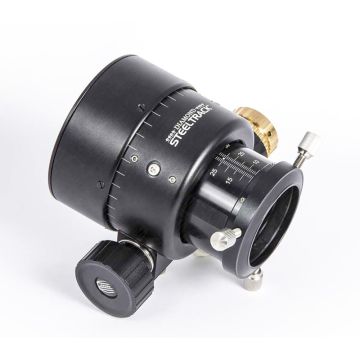
Find the Perfect Focuser for Your Setup
Many stock telescope focusers lack the precision and smooth operation needed for an optimal astronomy or imaging experience. Over time, wear and tear can make focusing less reliable.
Entry-level focusers, especially rack-and-pinion models, often suffer from backlash - a slight delay when changing focus direction. They may also struggle with heavier eyepieces or cameras, leading to sagging or slipping that disrupts focus. There's nothing more frustrating than reviewing your astrophotography images after a long night, only to find most are unusable due to poor focus.
Upgrading to a higher-quality focuser, like a Crayford or dual-speed model, offers smoother adjustments, better support for heavier accessories, and improved control for sharper images. At Agena, we're here to help you find the perfect focuser for your setup. With options to fit every budget, our range has something for everyone.
Types of Focusers for Telescopes
When upgrading your stock focuser, you can choose from various types, such as motorized, Crayford, rack-and-pinion, and helical. Each type offers different levels of precision and ease of use.
Make sure your new focuser is compatible with your telescope by checking the manufacturer’s website, or contacting us before purchasing.
Motorized Focusers
Best for astrophotography and precise focusing | $$-$$$
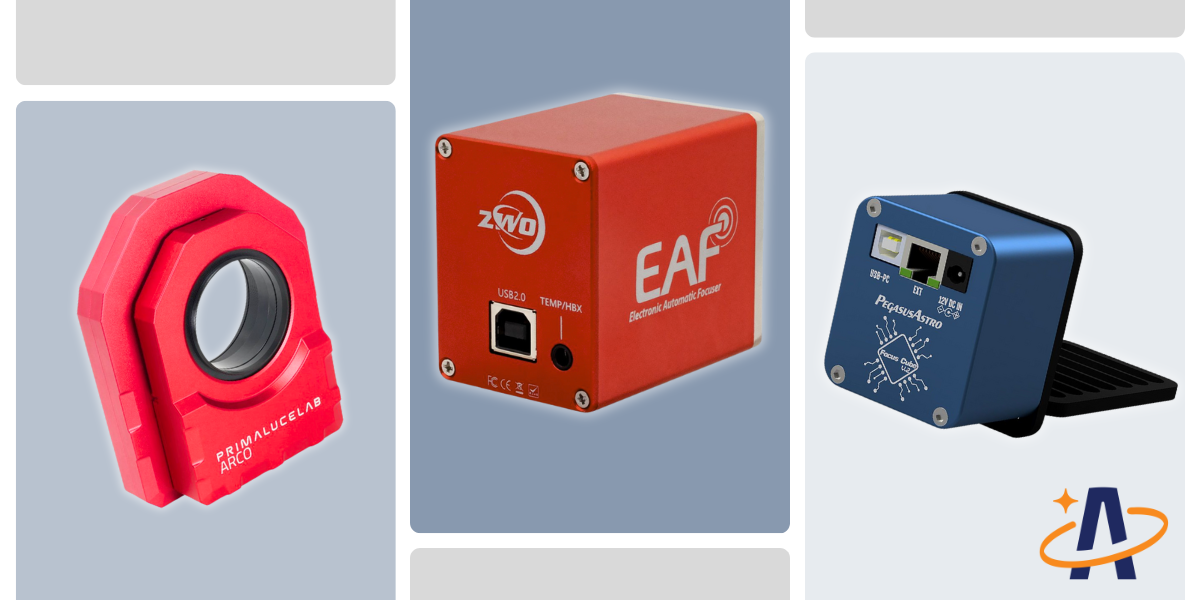
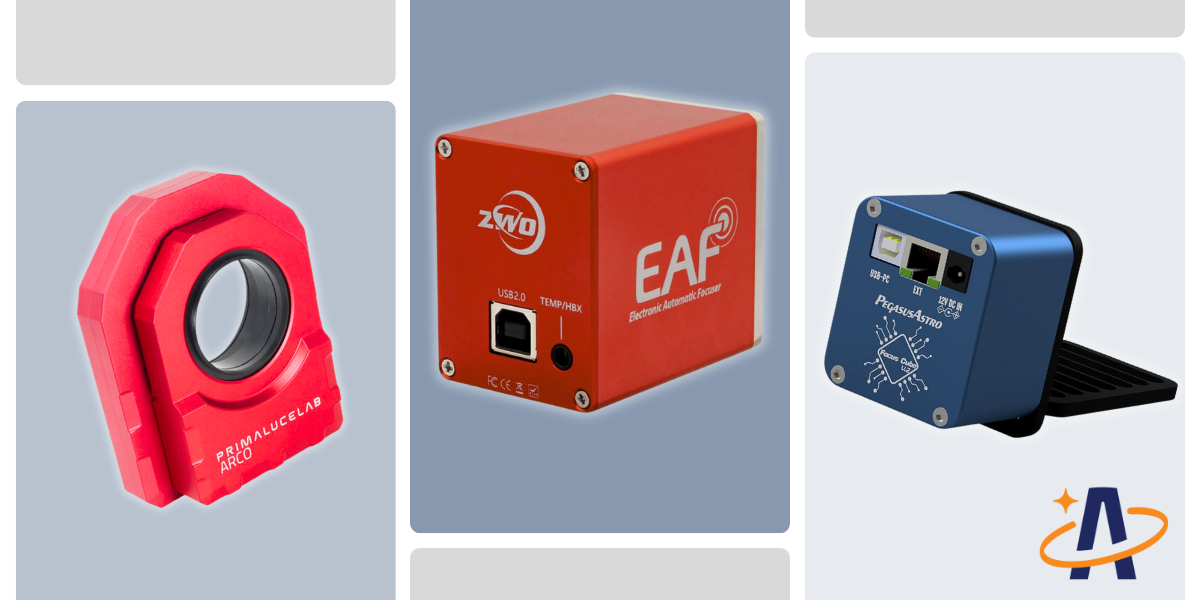
Motorized focusers are ideal for astrophotographers, offering precise control over focus adjustments. They attach directly to your telescope’s focusing system, allowing remote movement of the barrel via a hand controller, app, or software. This precision is crucial for capturing sharp images.
Most motorized focusers come with versatile mounting brackets designed to fit many telescope models. Check compatibility with your setup, as some may need additional adapters. They work well with:
- refractors
- SCTs
- Newtonians
- any telescope used for imaging.
Motorized focusers are powered by external power supplies or USB connections, depending on the model. Some connect to existing software, allowing control through USB or Wi-Fi. Popular software drivers like ASCOM and INDI let you fine-tune focus remotely and set up backlash compensation.
Pros: Easy to install, ideal for astrophotography, provides precise, repeatable, hands-free focusing with less vibration.
Cons: Can be pricier, require a power source, and may not fully resolve slippage issues caused by heavy cameras and accessories.
Crayford Focusers
Best for astrophotography and heavier imaging trains | $-$$
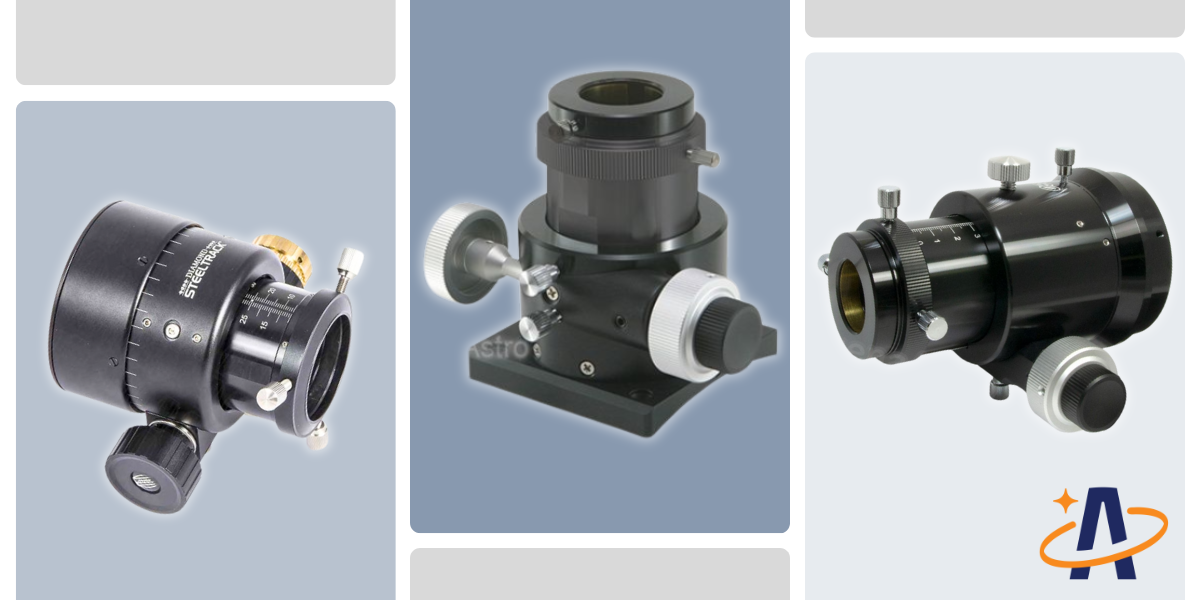
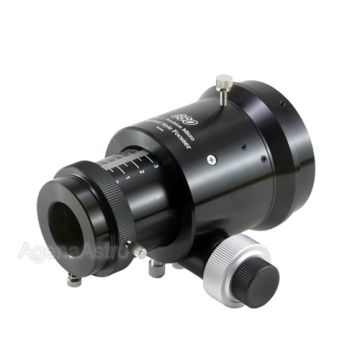
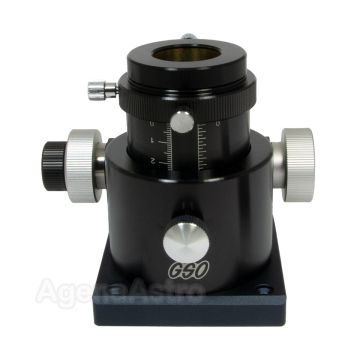
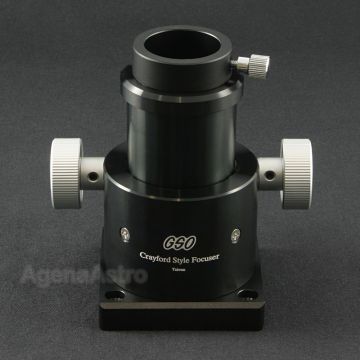
Crayford focusers use a friction-based system rather than traditional gears, providing smooth movement and eliminating backlash.
The eyepiece or camera is supported by a roller bearing system, or even a linear bearing in some models, which prevents wear and tear from gears.
Low-profile Crayford focusers are also available, offering compact designs for better balance.
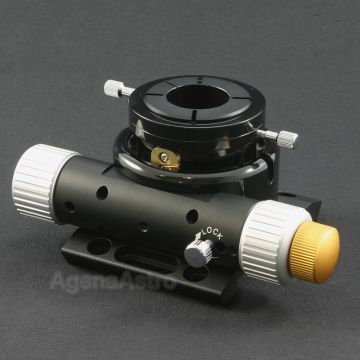
Dual-speed models offer both coarse and fine adjustments to help you dial in focus and get those sharp, clear shots. They’re are great if you’re using your telescope for astrophotography.
Crayford focusers generally work with most telescopes, but verify compatibility with your specific model. They are suitable for:
- high-end Refractors
- Newtonian reflectors (upgrades)
- Dobsonians (upgrades)
- Schmidt-Cassegrain telescopes (SCTs) (as an upgrade).
Crayford focusers are easy to install and maintain, and are made from durable materials.
Pros: Extremely smooth and accurate focusing, ideal for fine adjustments in astrophotography. Less maintenance due to the lack of gears.
Cons: Can be more expensive than rack-and-pinion models. Some models may struggle with heavy cameras and accessories.
Rack-and-Pinion Focusers
Best for general use and visual observing | $-$$
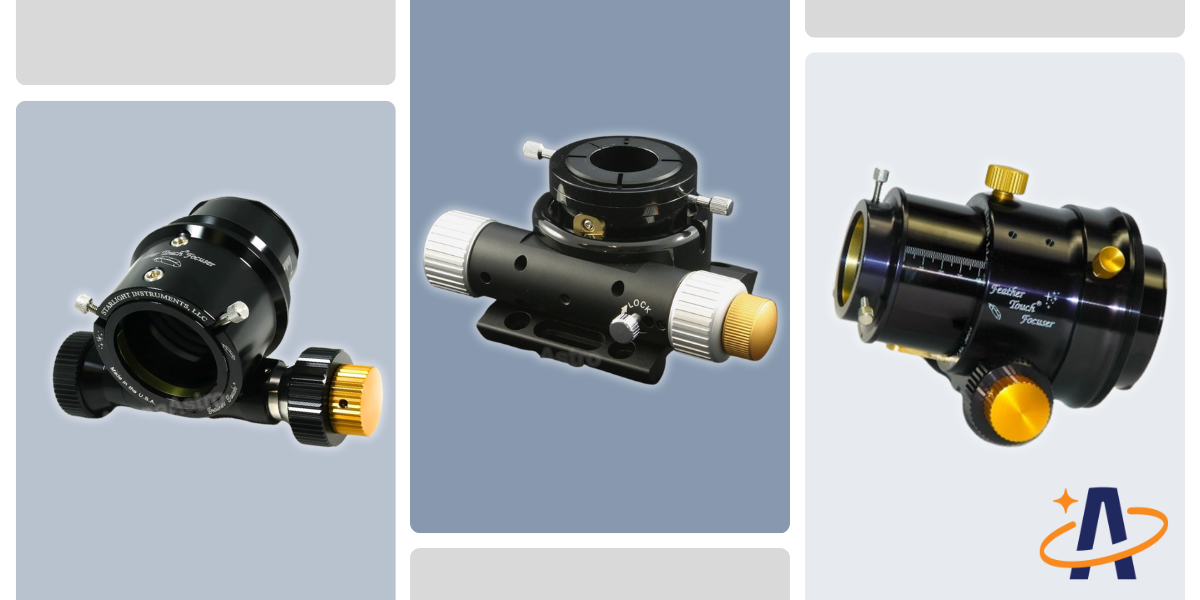
Rack-and-pinion focusers use a gear system where a straight bar (the rack) meshes with a small gear (the pinion). Turning the focus knob moves the rack, shifting the eyepiece or camera to achieve focus. This classic design is suitable for many telescopes and is easy to install. They work well with:
- refractors (small to mid-range)
- Newtonian reflectors
- Dobsonians (especially entry-level).
While durable, rack-and-pinion focusers may require upkeep to maintain performance. They are cost-effective and reliable for general use, but are less suited for astrophotography compared to other types.
Pros: Provides precise control for focusing, durable and reliable. Available in various models, including dual-speed options.
Cons: May not be as smooth as Crayford focusers. Requires regular maintenance to keep gears clean and lubricated. Might strain under heavy cameras and accessories.
Helical Focusers
Ideal for guide scopes, off-axis guiders, and eyepieces | $-$$
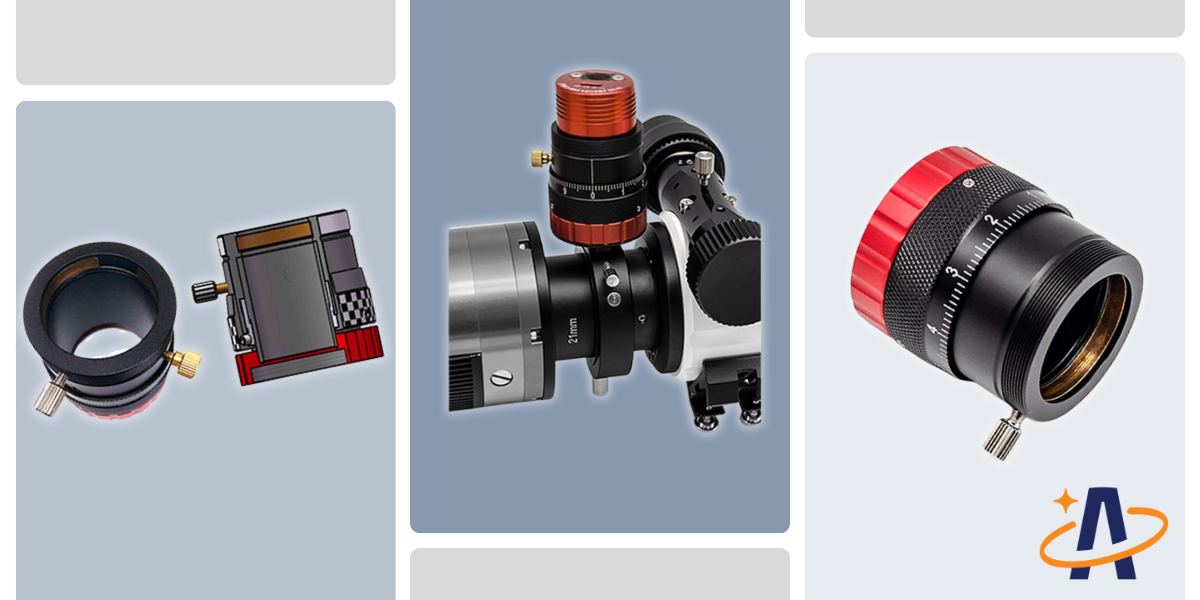
Helical focusers adjust focus by rotating the eyepiece or guide camera along a threaded tube, offering precise control in a compact design. They are simple to install and come in two main types:
- Standard Helical: Rotates the entire eyepiece or camera, which can be less convenient for astrophotography.
- Non-Rotating Helical: Keeps the eyepiece or camera stationary, ideal for astrophotography to maintain framing.
Helical focusers are great for precise adjustments in small setups, but are not suitable for heavier gear or quick adjustments. They work well with:
- guide scopes
- off-axis guiders
- small refractors.
Pros: Excellent fine focus control, compact and lightweight. Easy to install.
Cons: Slower adjustments compared to other focusers. Struggles with heavy cameras and accessories. Less smooth than Crayford focusers.
Need Help?
Our team is ready to help you choose the perfect focuser for your needs. If you have any questions or can't find what you’re looking for, contact us.
Frequently Asked Questions
How do Focusers Work?
Focusers adjust the position of the eyepiece or camera along the optical axis, changing the distance between the eyepiece and the telescope’s primary lens or mirror. This ensures light converges correctly, creating a sharp image.
What are the Key Features of a Focuser?
- Barrel: Holds the eyepiece or camera, typically with a standard diameter
- Drawtube: Moves in and out to adjust focus, holding the eyepiece or camera
- Flange: Attaches the focuser to the telescope tube for stability
- Focusing Mechanism: Can be rack-and-pinion, Crayford, or helical for precise control
- Knobs or Dials: Used for manual adjustments, some with fine control knobs
- Locking Screws: Secure the drawtube in place once focus is achieved
How do I Choose the Right Telescope Focuser?
Choosing the right telescope focuser depends on your observing style, the type of telescope you have, and how you plan to use it.
If you’re mainly doing visual observing, you could opt for a high quality rack-and-pinion focuser. If you’re mainly looking at planets, the moon, or bright objects, this type of focuser is often enough.
For astrophotography, you’ll want something more accurate like a Crayford focuser. They offer smooth and precise focusing, which is crucial for capturing sharp images. If you want to take photos of galaxies, nebulae, or detailed planetary shots, a Crayford focuser will give you the fine control you need.
To take your astrophotography to the next level, you can motorize your focuser. Motorized focusers allow hands-free, remote adjustments, which reduce vibrations and make it easier to get perfect focus all night long as the temperature shifts.
Make sure the focuser fits your telescope model and can handle the weight of your eyepiece or camera, and accessories like filter wheels. Some focusers, like Crayfords or motorized options, can be more expensive, but they’re worth it if you need fine control.
The right focuser will make a big difference in how easy and enjoyable it is to use your telescope.
How can I Improve My Focus?
Make small, gradual adjustments with your focuser until objects appear sharp. Upgrading to a more precise focuser, such as a Crayford or electronic model, can ease fine-tuning. Properly collimate your telescope for sharper views, and use focusing aids like a Bahtinov mask to fine-tune focus.
What is Backlash?
Backlash is the slight delay or slack when changing the direction of movement in a gear system, such as in rack-and-pinion focusers. This lag occurs when gears don’t engage immediately, affecting precise focus adjustments.
What is Backlash Compensation?
Backlash compensation corrects or minimizes the effects of backlash in gear-driven systems. It adjusts the gear movement to ensure smooth and precise transitions, making it easier to maintain accurate focus.
What is Focuser Slop?
Focuser slop is unwanted movement or play in a focuser, causing the eyepiece or camera to wobble or shift slightly. This results from loose or poorly aligned components, making it harder to achieve a sharp, steady image.