



25 Best Spring Deep Sky Objects for Stargazing and Astrophotography
Your Guide to Spring's Galaxy Season
Spring is a fantastic time for deep sky astronomy—especially if you're in the Northern Hemisphere. From March through May, the night sky tilts away from the bright nebulae of winter and summer and opens a window to the distant universe. This is what amateur astronomers call Galaxy Season—a stretch of clear nights where galaxies dominate the sky, especially in constellations like Virgo, Coma Berenices, and Leo.
You won’t find the colorful emission nebulae that are so popular in other seasons. But that’s part of the appeal. Spring is more challenging—and often more rewarding. It’s a great time to try something different, whether you're visual observing or imaging. With fewer bright showpieces, you’ll have the chance to chase overlooked targets and hone your observing skills.
In this guide, we’ve gathered 25 of the best deep sky objects to explore during Galaxy Season. You’ll find something for every skill level—beginner, intermediate, and advanced—with tips on where to find each target, what gear works best, and what makes each object special.
While many galaxies are faint and small, they’re well within reach with a telescope that has at least a 6-inch (150mm) aperture and a longer focal length. But don’t worry if you’re just starting out—there are still plenty of amazing sights to enjoy with smaller scopes or even binoculars.
Best Telescopes for Galaxy Season: Our Top Picks
To make the most of galaxy season, you’ll want a telescope that’s up to the task. Galaxies are often faint and small, so aperture and focal length matter. Here are our favorite telescopes for spotting distant galaxies and other deep sky targets this spring.
Best galaxy season telescopes for visual:
- Dobsonian Telescope (ideally 6” or larger in aperture).
Best galaxy season telescopes for astrophotography:
- Schmidt-Cassegrain
- Newtonians (ideally 6” or larger in aperture)
- Refractors (ideally 4” or larger in aperture)
- Ritchey-Chretien.
When to Observe or Capture Galaxies & Other Deep Sky Objects
Timing is crucial when planning for specific deep-sky objects. Whether you're visually observing or capturing long exposures, dark skies make all the difference. Galaxies, nebulae, and other deep-sky objects are often faint and low in contrast, making them vulnerable to light pollution and moonlight, which can wash out their details.
For the best results, you should always plan your sessions around the new moon. During this time, the moon isn’t visible in the night sky. This ensures the darkest skies, offering the best chance to observe or photograph faint galaxies, nebulae, and other deep-sky objects. Even a half moon can brighten the sky enough to make dim galaxies and nebulae hard to observe or photograph. If you can’t wait for the new moon, try after moonset or before moonrise when the moon is below the horizon.
Spring skies are often clearer and more stable than summer, which means better seeing conditions, a big win for both visual observers and astrophotographers.
Locating Targets in the Night Sky
Finding spring targets can be tricky given their smaller sizes and lower surface brightness. This is especially true with a manual telescope, but planetarium apps make it much easier. Apps like Stellarium, SkySafari, and Star Walk 2 show you exactly where objects are in the sky in real-time. With a red dot finder or laser pointer, you can use these apps to identify bright stars and "star hop" your way to fainter galaxies. Stellarium is especially useful for visual observing—it lets you preview what a target will look like through your specific telescope and eyepiece.
If you're using a GoTo mount, you can select a target once the mount is polar aligned and it will slew there for you. Many GoTo systems can also connect to planetarium apps for direct control for even easier navigation.
For astrophotographers, Telescopius is a great web-based tool to help frame astrophotography targets based on your exact telescope and camera setup. These tools take the guesswork out of galaxy season, whether you’re observing visually or capturing long exposures.
Beginner Spring Targets
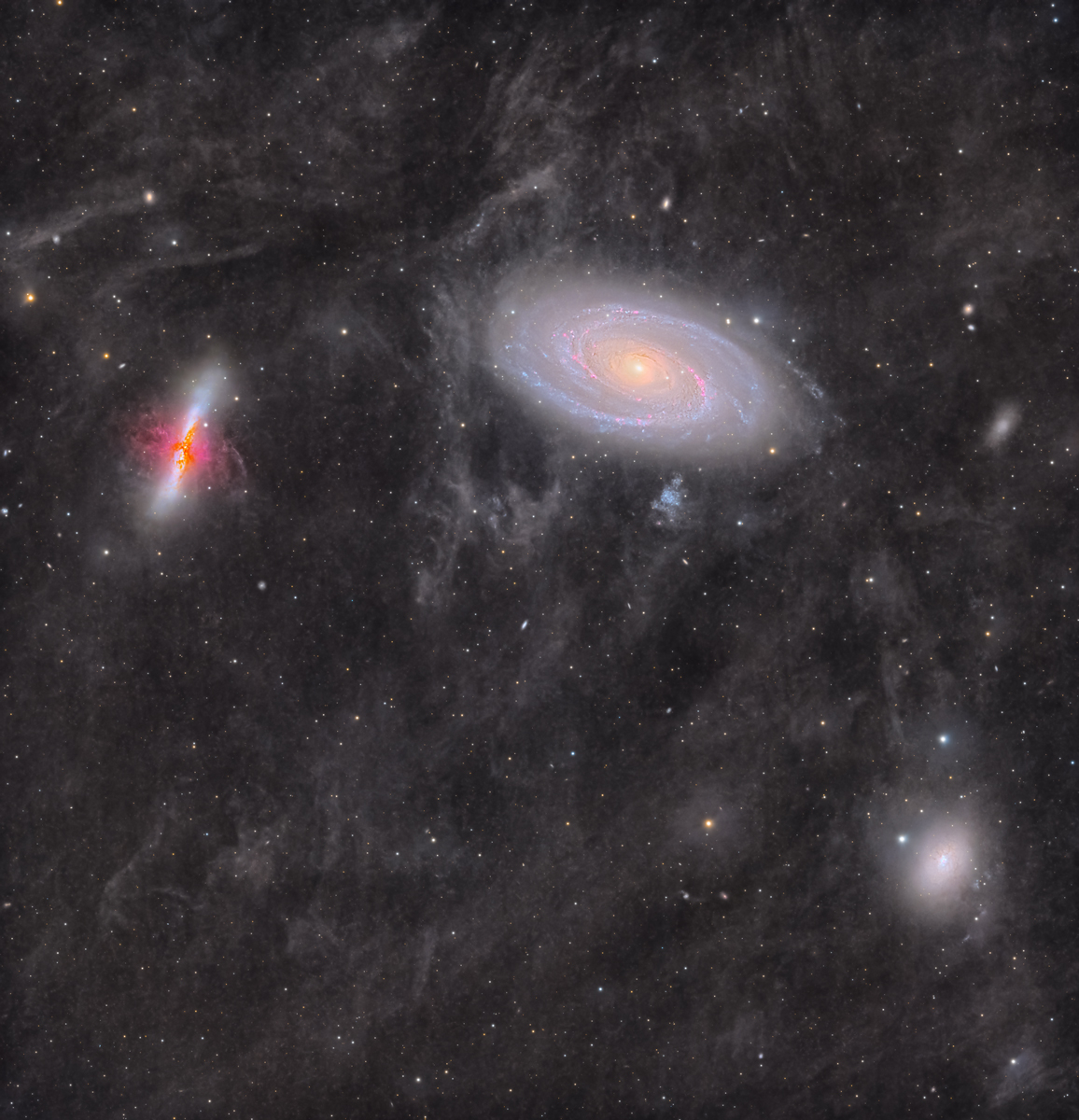
Messier 81 (right) & Messier 82 (left) by Chuck Ayoub.
1: Bode’s Galaxy (M81) & the Cigar Galaxy (M82)
- Object Type: Spiral Galaxy & Starburst Galaxy
- Constellation: Ursa Major
- Distance: ~12 million light-years
- Apparent size: 55’ x 27’ (for both)
- Apparent magnitude: 7
One of the most spectacular targets in the Northern Hemisphere, Messier 81 & Messier 82 are a stunning pair of galaxies seemingly right next to each other. Located near the North Celestial Pole (near Polaris), this pair of targets is visible all year round but best viewed in the winter and spring months as they are high in the sky early in the evening.
You can view Messier 81 & Messier 82 through small telescopes and even with larger binoculars. At a magnitude of 7, they are quite bright. This means you can see them even in relatively light-polluted areas!
For astrophotographers, the pair makes a particularly stunning target. If you’re up for a challenge, try to reveal some of the faint Integrated Flux Nebula (IFN) that spans between both galaxies.
Fun fact: Messier 81, originally discovered in 1774 by Johann Bode, was named “Bode’s Nebula” as it was not yet known what a galaxy was. For that reason, some amateur astronomers still call it “Bode’s Nebula” to this day.
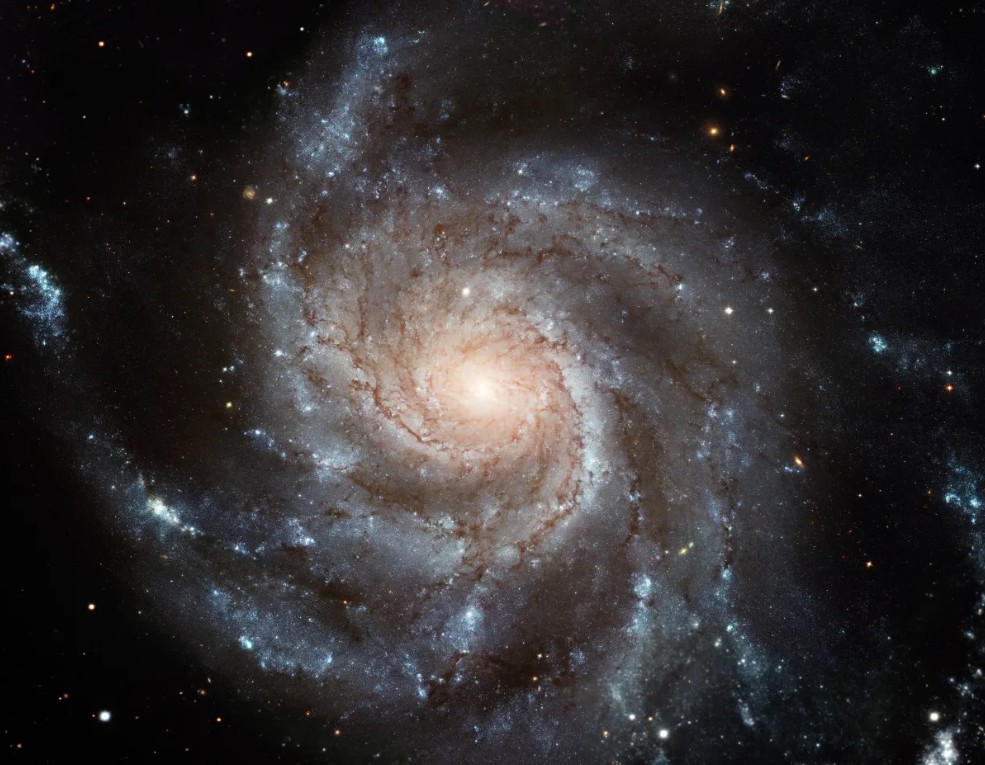
The Pinwheel Galaxy as captured by the Hubble Space Telescope (NASA).
2: The Pinwheel Galaxy (M101)
- Object Type: Spiral Galaxy
- Constellation: Ursa Major
- Distance: ~21 million light-years
- Apparent size: 29’ x 27’
- Apparent magnitude: 7.9’
The Pinwheel Galaxy (M101) is a stunning spiral galaxy known for its face-on appearance. It showcases a beautiful, well-defined spiral structure that has multiple long, winding arms filled with bright stars and nebulae. This galaxy is quite large, spanning roughly 170,000 light-years, making it even bigger than our Milky Way!
M101 is best observed with a full-size telescope, although it is visible through binoculars under dark skies. And thanks to its size, brightness, and well-defined structure, it also makes for an excellent astrophotography target. Spring is a great time to view M101, as it’s high in the northern sky and you can spot it even in some areas with light pollution.
With its beautiful structure and proximity, M101 is one of the most rewarding galaxies for both observers and astrophotographers.
Fun fact: The Pinwheel Galaxy (M101) is so massive and detailed that it’s home to over 1 trillion stars. That's twice as many as the Milky Way! It also has dozens of bright, giant star-forming regions, including one called NGC 5461, which is often mistaken for an entire galaxy on its own.
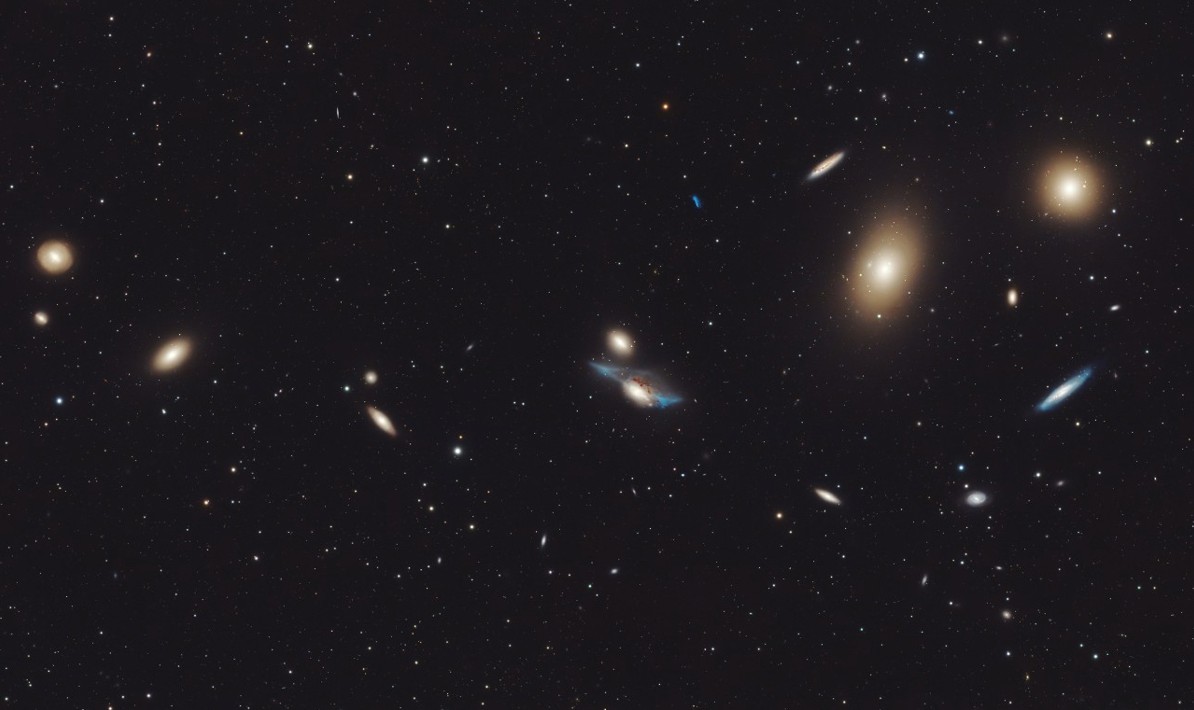
Marakarian's Chain as captured by Dan Pritzl
3: Markarian’s Chain
- Object Type: Galaxy Chain
- Constellation: Virgo
- Distance: Varies by galaxy ( some are ~50 million light-years)
- Apparent Size: Varies by galaxy
- Apparent Magnitude: Around 9–12 (varies based on individual galaxies)
Markarian’s Chain is a beautiful string of galaxies in the Virgo Cluster, a prime area for galaxy hunters. This chain is composed of several galaxies, including the famous M84 and M86, and offers a rich field for visual observers and astrophotographers alike. It's a great beginner target because, while the individual galaxies are somewhat faint, the overall chain is easy to spot. For astrophotographers, this target offers a striking variety of galaxy shapes and sizes.
Fun fact: Markarian’s Chain is named after the Armenian astronomer Boris Markarian, who first cataloged the galaxies in this chain in the 1960s. It’s part of the Virgo Cluster, one of the closest large galaxy clusters to the Milky Way, and it’s known for its fascinating combination of interacting and non-interacting galaxies.
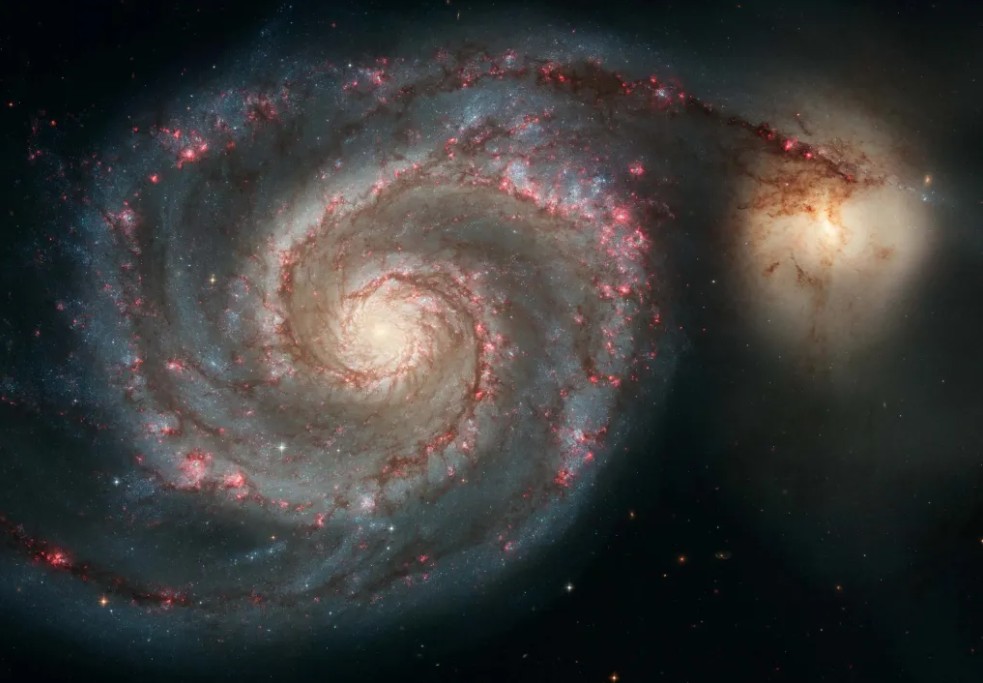
The Whirlpool Galaxy as captured by NASA, ESA, S. Beckwith (STScI) and the Hubble Heritage Team (STScI/AURA).
4: The Whirlpool Galaxy (M51)
Object Type: Spiral Galaxy
Constellation: Canes Venatici
Distance: ~31 million light-years
Apparent Size: 11’ x 7’
Apparent Magnitude: 8.4
M51, also known as the Whirlpool Galaxy, is one of the most iconic galaxies in the night sky. It's famous for its stunning spiral arms, which are beautifully interacting with its companion galaxy, NGC 5195. It's a great target for both visual observers and astrophotographers, though it works best with telescopes 6” or larger. For photographers, capturing the spiral arms and the interaction with NGC 5195 can result in dramatic and sharp images.
Fun fact: The Whirlpool Galaxy was one of the first galaxies discovered to be interacting with another galaxy. The effects of that interaction can be seen in the NGC 5195 galaxy, which appears to be “pulling” on the Whirlpool’s spiral arms. It’s also one of the most photographed galaxies due to its distinct, graceful spiral structure.
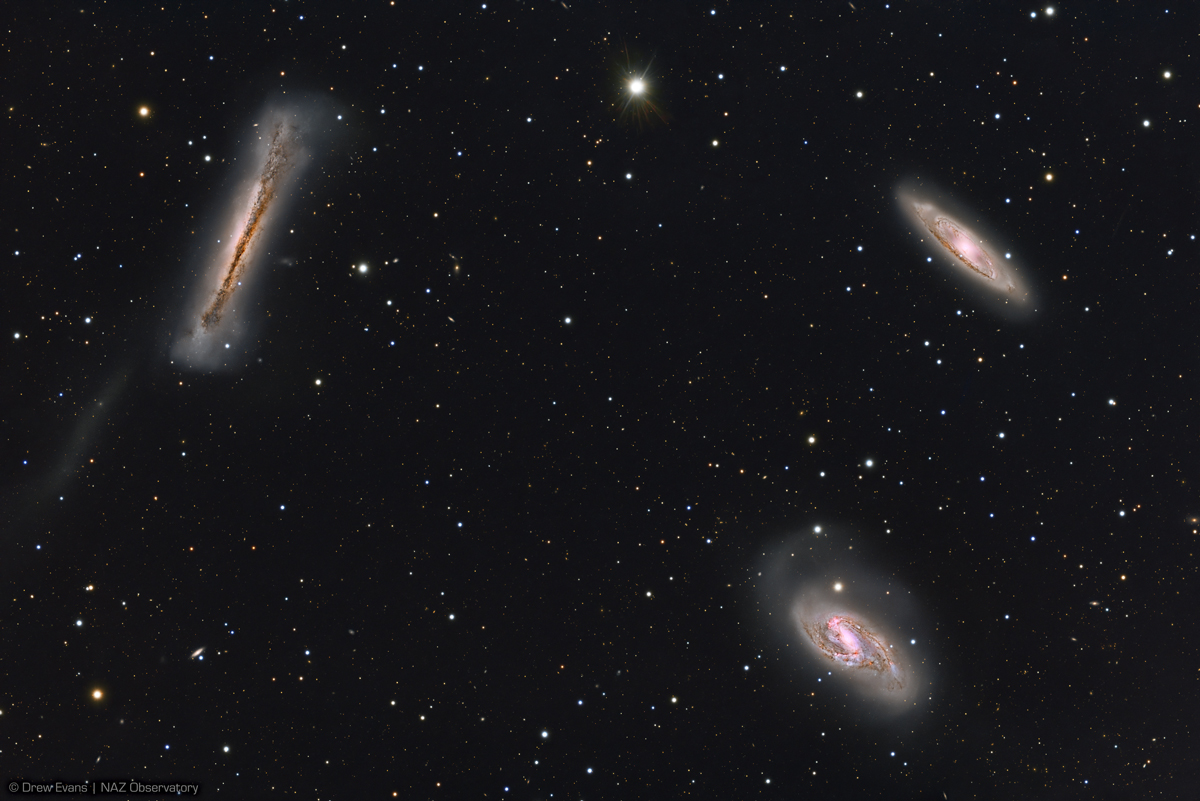
The Leo Triplet in LRGBHa as captured by Drew Evans.
5: Leo Triplet (M65, M66, and the Hamburger Galaxy)
- Object Type: Galaxy Triplet
- Constellation: Leo
- Distance: ~35 million light-years
- Apparent Size: Varies
- Apparent Magnitude: Around 8–9
The Leo Triplet is a group of three bright galaxies—M65, M66, and NGC 3628 (the Hamburger Galaxy)—which form a tight, visually striking trio in the sky. These galaxies are relatively easy to observe with mid-size telescopes and offer fantastic opportunities for astrophotography. The unique edge-on view of NGC 3628 (the Hamburger Galaxy) is particularly interesting, making this group an engaging visual target. The galaxies in this trio also display different structural features, making it a great study of galaxy morphology.
Fun fact: The Leo Triplet is famous for its closeness to Earth, making it one of the most well-studied groups of galaxies. The Hamburger Galaxy (NGC 3628) gets its nickname from its resemblance to a hamburger, especially when viewed edge-on. It’s often considered a prime example of a "tidally interacting" galaxy, influenced by its neighbors.

M13 Great Hercules Cluster and NGC6207 (True Color) by Douglas Triggs.
6: The Hercules Cluster (M13)
- Object Type: Globular Cluster
- Constellation: Hercules
- Distance: ~25,000 light-years
- Apparent Size: 20’
- Apparent Magnitude: 5.8
The Hercules Cluster (M13) is a dazzling globular cluster that contains hundreds of thousands of stars. Though not a galaxy, it’s an important deep-sky object to observe during galaxy season. It’s bright enough to be seen with the naked eye under dark skies and is an excellent target for visual observers, offering a spectacular view through any telescope. It’s also a fun target for astrophotographers, providing a rich field of stars with long exposure options to capture its intricate star patterns.
Fun fact: The Hercules Cluster is home to over 300,000 stars. It’s one of the brightest globular clusters in the sky and is visible to the naked eye in dark skies. It’s thought that globular clusters like M13 are among the oldest objects in the universe, with some stars being over 13 billion years old!
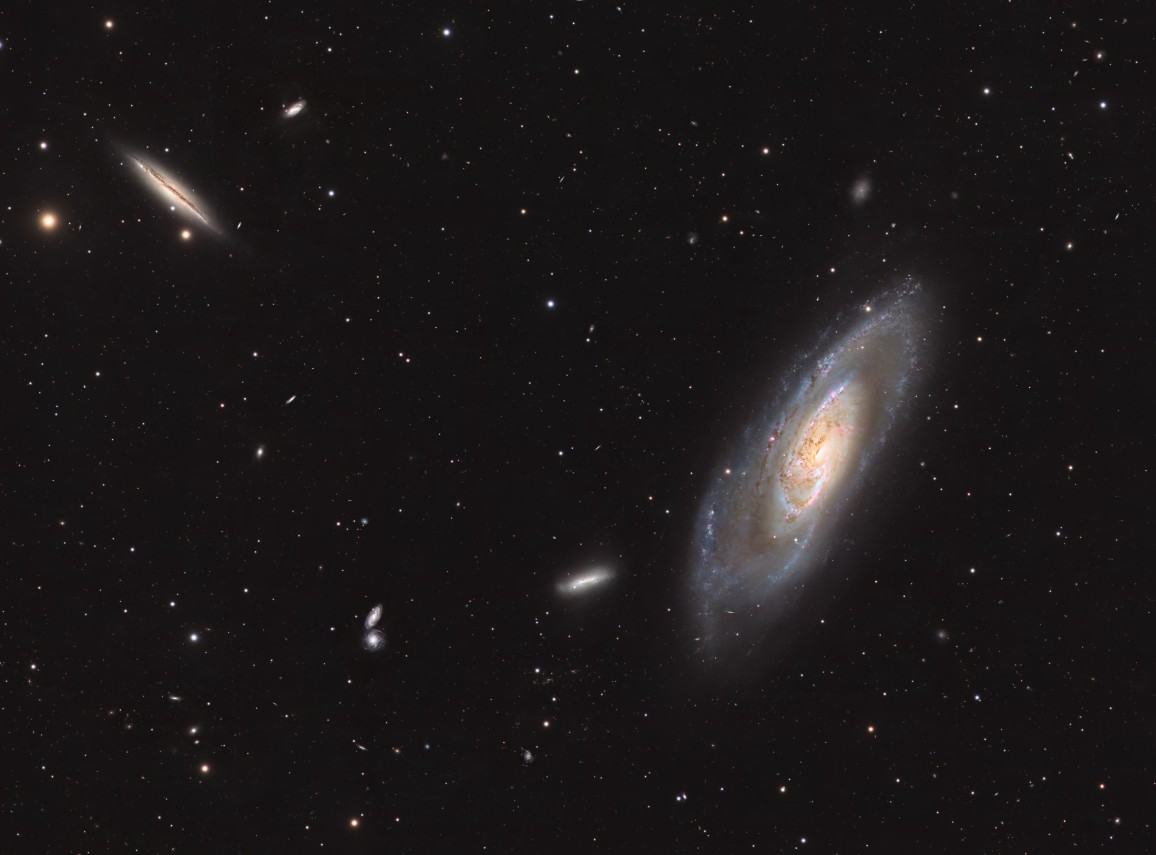
M106 and NGC4217 as captured by Michele Bayliss.
7: Messier 106 & NGC 4217 Galaxy Pair
- Object Type: Spiral Galaxies
- Constellation: Canes Venatici
- Distance: M106 ~22 million light years, NGC 4217 ~60 million light years
- Apparent Size: M106: 18’ x 8’, NGC 4217: 7’ x 2’
- Apparent Magnitude: M106: 8.4, NGC 4217: 12.4
If you're looking for a rewarding deep-sky challenge, don’t miss the galaxy duo M106 and NGC 4217 in Canes Venatici. This eye-catching pair is perfect for visual observers and wide-field astrophotographers.
Messier 106 (M106) is the star of the show. It’s bright, easy to find with a moderate telescope, and packed with unique features. Unlike most spiral galaxies, which typically have two arms, M106 has a second set of ghostly arms made of hot gas. These reddish wisps are best photographed using a Hydrogen Alpha filter and long exposures. The extra arms are thought to be caused by the activity of the supermassive black hole at the galaxy’s center, making M106 not just a pretty face, but also a powerful example of galactic dynamics.
Nearby in the same field of view is NGC 4217, a much fainter spiral galaxy seen edge-on. It’s elongated, slim, and beautifully framed against the background of stars and galaxies. While it's less luminous than M106, its orientation and faint details add contrast and depth, offering a fun observing challenge and a stunning photographic companion.
Because they're close together in the sky, both galaxies can be captured in a single wide-field image, making this pair a top target for galaxy season.
Fun fact: M106 is unique because it’s an active galaxy, featuring a supermassive black hole at its center that’s feeding on surrounding gas. This galaxy also has an interesting phenomenon called X-ray emission, making it a subject of study for astronomers interested in black holes.
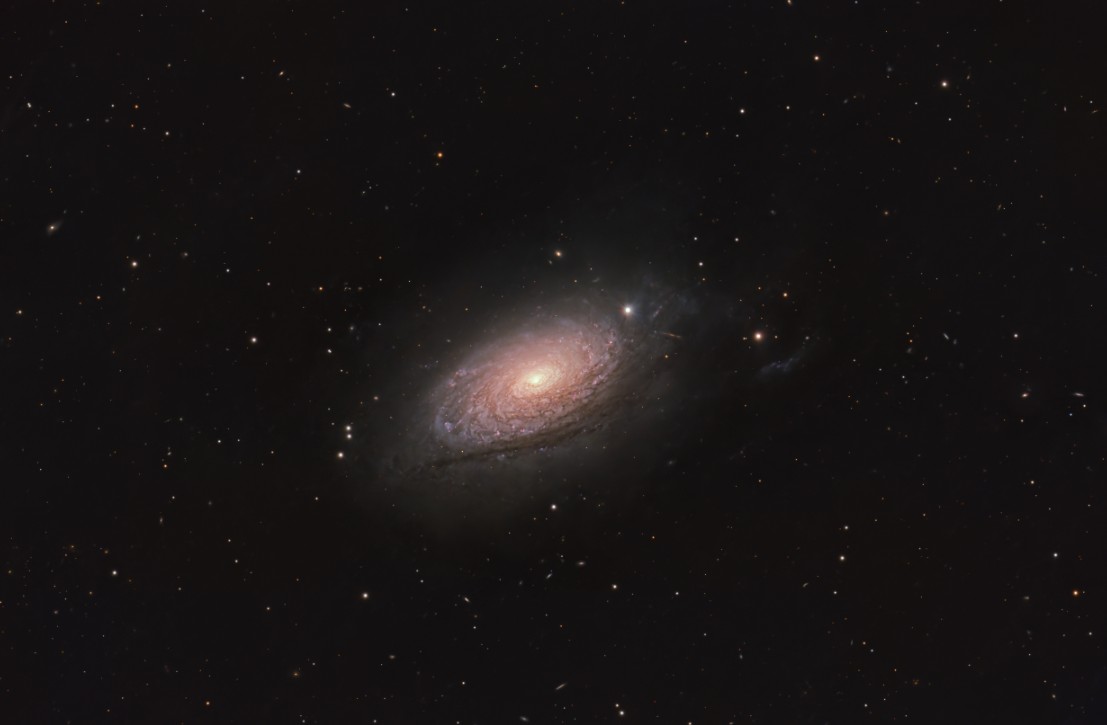
The Sunflower Galaxy as captured by Stephen Heliczer.
8: The Sunflower Galaxy (M63)
- Object Type: Spiral Galaxy
- Constellation: Canes Venatici
- Distance: ~29.3 million light-years
- Apparent Size: 12’.6 x 7’
- Apparent Magnitude: 9.3
The Sunflower Galaxy (M63) is a beautiful spiral galaxy located in the Canes Venatici constellation. It’s a relatively bright galaxy, so it’s a good target for smaller telescopes or binoculars, though larger instruments will reveal more intricate details, especially in the spiral arms. Astrophotographers will appreciate capturing the detailed structure of its arms and bright glowing core.
Fun fact: The Sunflower Galaxy got its name because its spiral arms resemble the petals of a sunflower. It’s also one of the brightest galaxies in its region of the sky, making it an excellent target for both beginner and intermediate observers. Some of its spiral arms are unusually bright due to highly active star formation, which is still ongoing.
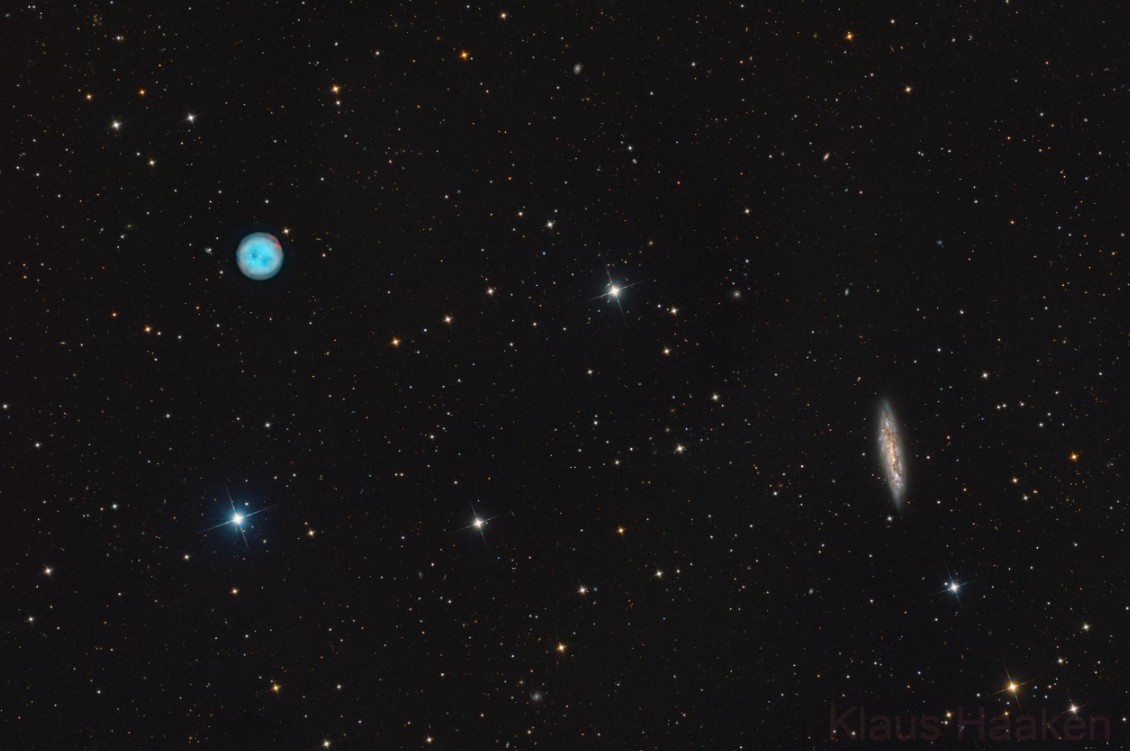
M97 Owl Nebula and M108 Surfboard Galaxy as captured by Klaus Haaken.
9: The Owl Nebula (M97) & The Surfboard Galaxy (M108)
- Object Type: Planetary Nebula (M97) & Spiral Galaxy (M108)
- Constellation: Ursa Major
- Distance: M97: ~2,030 light years, M108: ~46 million light-years
- Apparent Size: M97: 3’ x 3’, M108: 8’.7 x 2’.2
- Apparent Magnitude: M97: 9.9, M108: 10.1
The Owl Nebula (M97) is a stunning planetary nebula known for its resemblance to owl eyes, and it pairs beautifully with the Surfboard Galaxy (M108), a long, thin spiral galaxy. Together, they make for an intriguing pair, offering a mix of nebula and galaxy features in the same view. M97 is a dim target, requiring a telescope of at least 6” for clear visibility, while M108 is faint but distinct with a long, narrow appearance. Both are best viewed with a dark sky, and they make for a fascinating astrophotography target when captured together.
Fun fact: The Owl Nebula (M97) is one of the most symmetric planetary nebulae known. It’s also very faint, making it a tough target for amateur astronomers. The Owl Nebula (M97) got its name in 1848 when astronomer William Parsons sketched its two dark central “eyes,” which reminded him of an owl’s face. It was originally discovered in 1781 by Pierre Méchain, a colleague of Charles Messier, who later added it to his famous catalog.

M44 Beehive Cluster as captured by David Zimák.
10: The Beehive Cluster (M44)
- Object Type: Open Cluster
- Constellation: Cancer
- Distance: ~600 light-years
- Apparent Size: 95’
- Apparent Magnitude: 3.7
The Beehive Cluster (M44) is one of the most stunning and well-known open clusters in the night sky. It’s easy to find, making it a great target for beginners and perfect for visual observation. Even binoculars can give you a good view, but a small to mid-sized telescope will allow you to appreciate its hundreds of stars spread across a wide field. For astrophotographers, this cluster offers a beautiful field to capture in wide-field shots, with its vibrant blue and golden stars scattered in a bright and dense pattern that makes for an appealing composition. Mars is known to pass close to the cluster, so if you're lucky, you might capture them both!
Fun fact: The Beehive Cluster is one of the closest open clusters to Earth. It’s made up of over 1,000 stars, many of which are similar in age, size, and temperature. It’s also one of the easiest deep-sky objects to spot, and it has been known since ancient times—the Romans used it to mark the spring equinox.
Intermediate Spring Targets
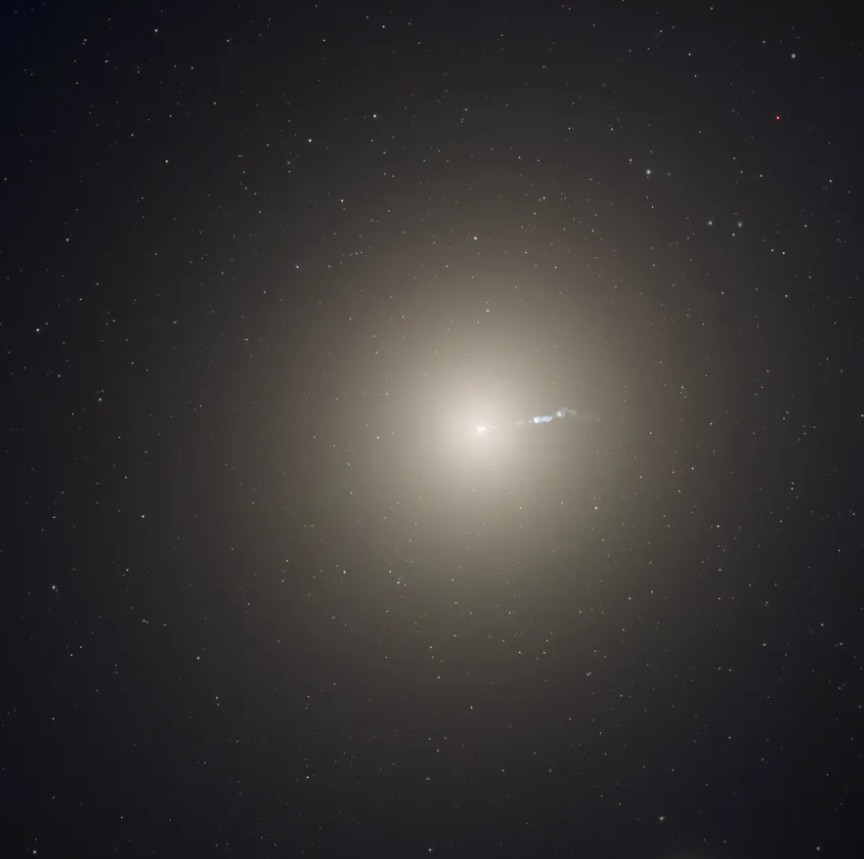
M87 as captured by NASA, ESA, and the Hubble Heritage Team (STScI/AURA); Acknowledgment: P. Cote (Herzberg Institute of Astrophysics) and E. Baltz (Stanford University).
11: Messier 87 (M87)
- Object Type: Elliptical Galaxy
- Constellation: Virgo
- Distance: ~53 million light-years
- Apparent magnitude: 8.6
Messier 87 (M87) is a supermassive elliptical galaxy packed with trillions of stars and over 15,000 globular clusters, which is about 100 times more than the Milky Way! What makes M87 truly famous is the supermassive black hole at its center, which has a mass billions of times that of our Sun. In 2019, it made history when it became the first black hole ever imaged, marking an iconic moment in science.
Visually, M87 appears as a round, diffuse glow, almost star-like at first glance, but without the pinpoint brightness. As is true with all elliptical galaxies M87doesn't have spiral arms; instead, it shows a smooth, bright halo. For the best views, use a medium to large telescope (6" or larger).
Fun fact: M87 shoots out a massive jet of matter that's 5,000 light-years long, powered by its black hole! In long-exposure astrophotos, you might even capture it!
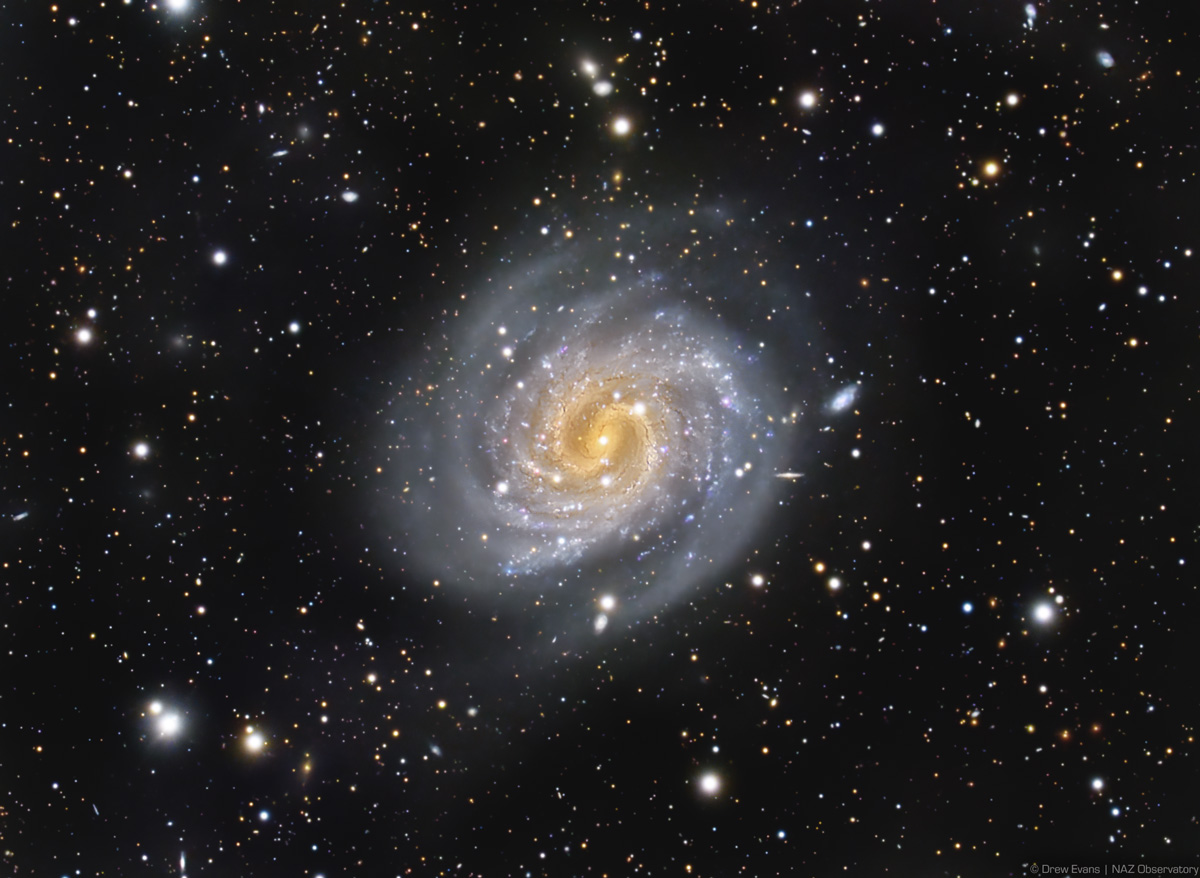
The Lost Galaxy, as captured by Drew Evans.
12: The Lost Galaxy (NGC 4535)
- Constellation: Virgo
- Object Type: Barred Spiral Galaxy
- Distance: ~54 million light-years
- Apparent magnitude: 10.73
Located in the Virgo constellation is NGC 4535, commonly known as The Lost Galaxy. It gets its nickname because of how faint and ghostly it appears through smaller scopes. NGC 4535 is a beautiful barred spiral galaxy located about 50 million light-years away. Although it is faint, it's one of the brighter members of the Virgo Cluster, a large group of galaxies that dominates this region of the sky, making it a fantastic spring target for both visual observers and astrophotographers during galaxy season.
In a small to medium telescope, NGC 4535 appears as a soft, hazy patch of light—its low surface brightness and diffuse structure can make it tricky under light-polluted skies, but it pops under dark conditions. Through larger apertures, observers may begin to notice its central bar and hints of its delicate spiral arms.
Fun fact: Astronomer Leland S. Copeland nicknamed it the “Lost Galaxy” after observing it from dark skies in the 1950s—it seemed to fade away when viewed directly!
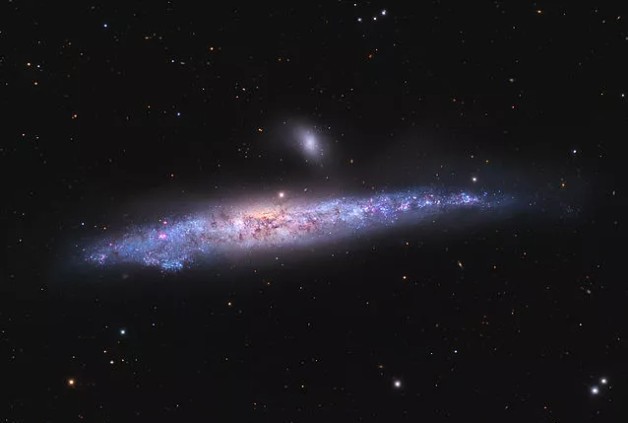
The Whale Galaxy by NASA/ESA.
13: The Whale Galaxy (NGC 4631)
- Constellation: Canes Venatici
- Object Type: Edge-on Spiral Galaxy
- Distance: ~30 million light-years
- Apparent magnitude: 9.8
NGC 4631, known as the Whale Galaxy, is a stunning edge-on-barred spiral galaxy. Its curved, elongated shape resembles a whale swimming through space, making it an easy and memorable target during galaxy season. In telescopes 6" or larger, it appears as a bright, slender streak with a slightly concentrated core. Nearby, you’ll also find NGC 4627, nicknamed the “Calf”, forming the Whale and Calf pair. For astrophotographers, NGC 4631 reveals rich detail, including dust lanes and star-forming regions, with long exposures.
Fun fact: The Whale Galaxy (NGC 4631) is blasting out X-rays from intense star formation and supernova activity, so much so that astronomers think it has a "superwind" blowing material right out of the galaxy's disk, just like a whale’s blowhole!
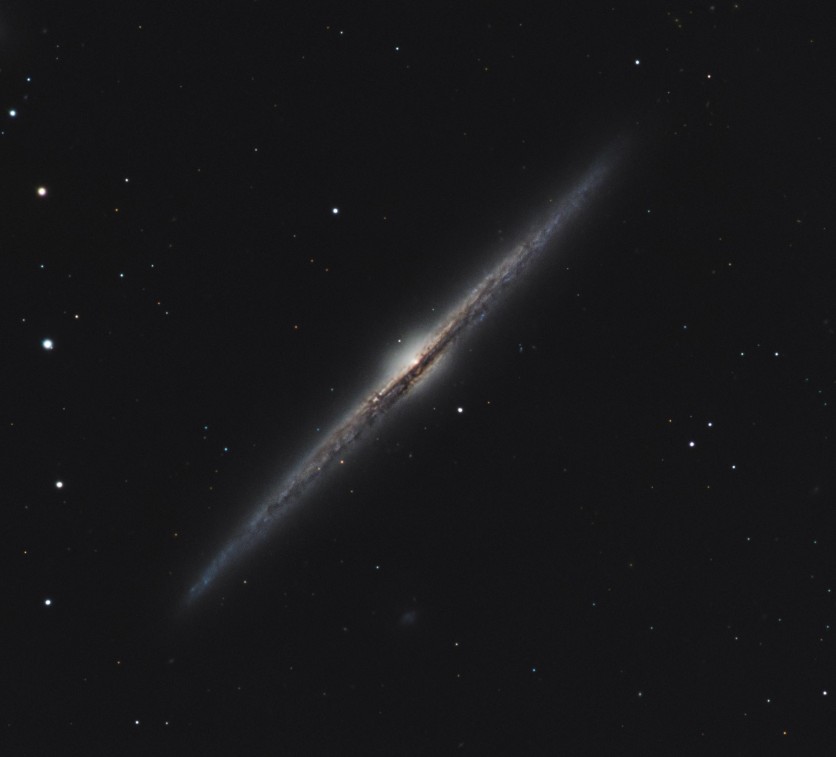
The Needle Galaxy as captured by astrophotographer George KonKov.
14: The Needle Galaxy (NGC 4565)
- Constellation: Coma Berenices
- Object Type: Edge-on Spiral Galaxy
- Distance: ~30–50 million light-years
- Apparent magnitude: 10.42
NGC 4565, also known as the Needle Galaxy or Caldwell 38, is a bright, edge-on spiral galaxy. More luminous than Andromeda, it features a central bar, inner ring, and central bulge. With over 240 globular clusters and at least two companion satellite galaxies, NGC 4565 is a key member of the Coma I Group. Deep surveys reveal a warped disk and a faint radio halo, likely from past interactions or star formation activity. A 4" (100mm) or larger telescope will reveal it as a narrow, elongated sliver of light. With an 8" or larger telescope, you'll start to notice more detail in the central bulge and disk.
Fun fact: Astronomers believe this galaxy looks similar to how our own Milky Way would appear if we could see it from the side.
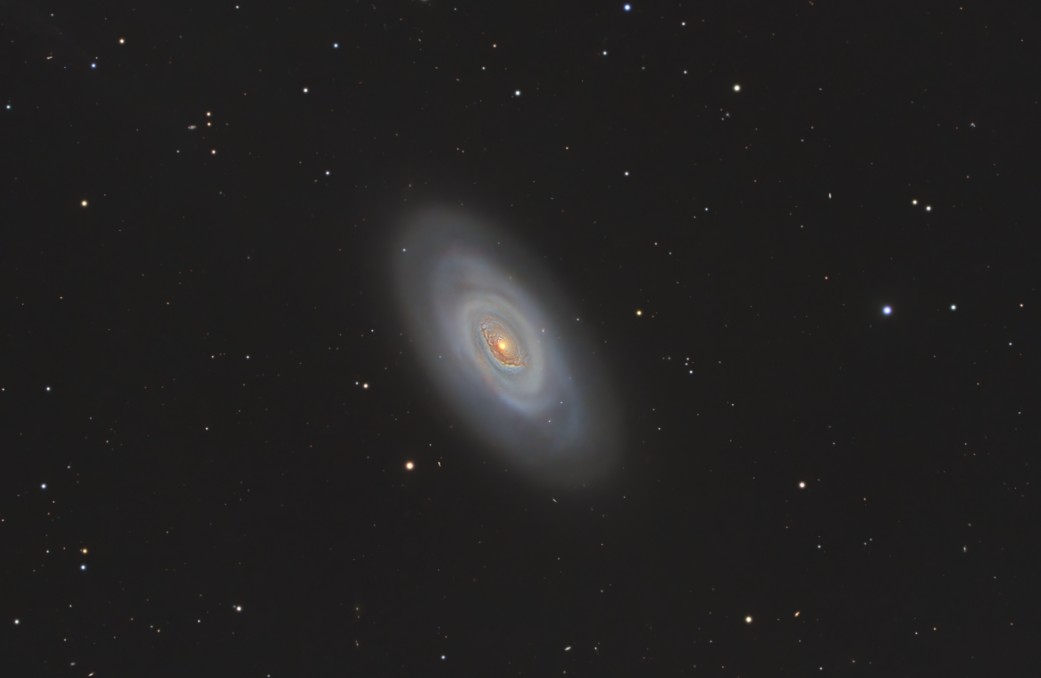
The Black Eye Galaxy as captured by Drew Evans.
15: The Black Eye Galaxy (M64)
- Constellation: Coma Berenices
- Object Type: Spiral Galaxy
- Distance: ~17 million light-years
- Apparent magnitude: ~9
Messier 64, better known as The Black Eye Galaxy, is a striking spiral galaxy. It’s famous for the dark dust lane partially obscuring its bright nucleus, giving it the appearance of a black eye in images. The galaxy is visible in small telescopes (4" and up) from dark skies. It appears as a small, bright oval. The dark “black eye” dust lane starts to show up in 6" or larger scopes, especially under good seeing conditions and with averted vision.
Fun fact: The gas in the outer regions of the galaxy rotates in the opposite direction from the inner regions, possibly due to a past galactic collision.
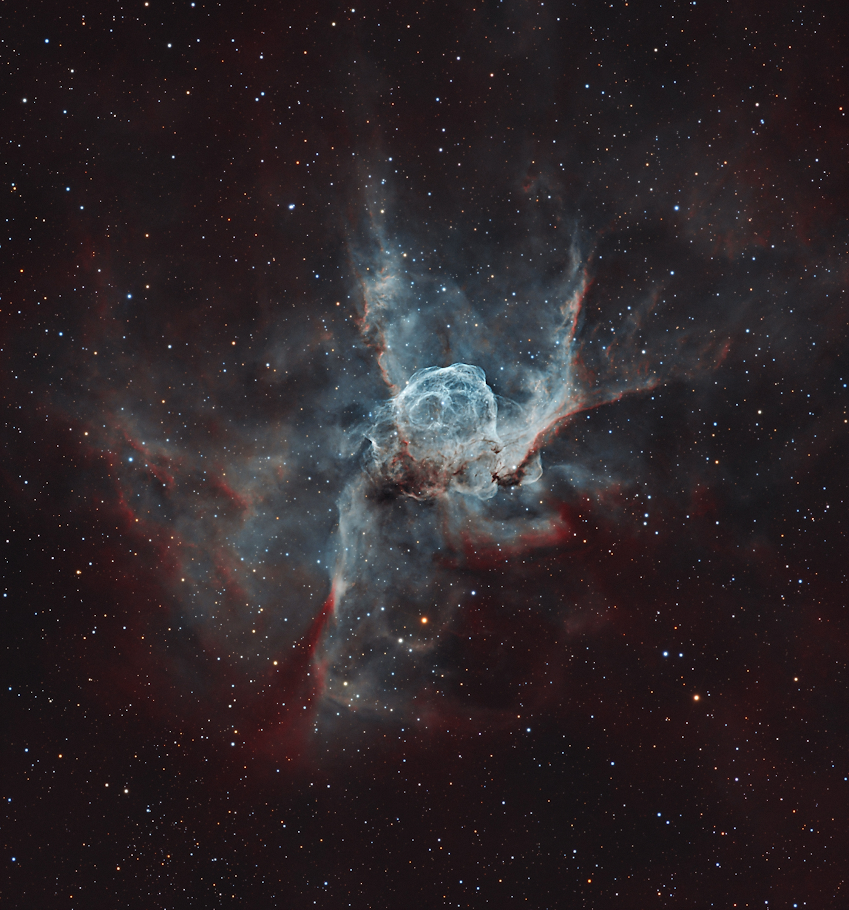
Thor’s Helmet as captured by Tommy Lease.
16: Thor’s Helmet Nebula (NGC 2359)
- Constellation: Canis Major
- Object Type: Emission Nebula
- Distance: ~12,000 light-years
- Apparent magnitude: 11
With its sweeping wings and glowing, bubble-like core, this nebula bears a striking resemblance to a certain Norse god’s iconic helmet, earning it its legendary nickname. That dramatic shape comes from powerful stellar winds blasting out from the super-hot central star, WR7, which is nearing the end of its life. These winds collide with surrounding gas and dust, creating glowing arcs and filaments that shine in long-exposure astrophotography. It's also listed under other names like Sharpless 2-298 and Gum 4, but no matter what you call it, Thor’s Helmet is a knockout nebula that’s both a fun challenge and a beautiful reward for imagers. It’s a great target for wide-field photography—especially when paired with its neighbor, the Seagull Nebula—but it really shines when captured with longer focal lengths.
Fun fact: The central star (WR7) is a Wolf-Rayet star, one of the hottest, most massive, and most unstable stars known.
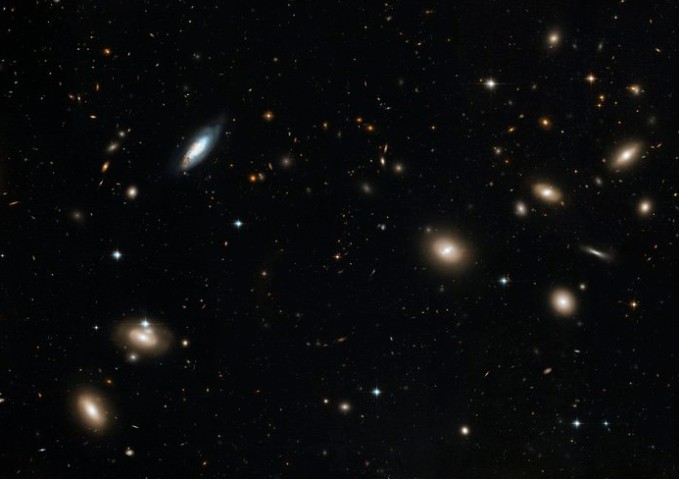
The Coma Cluster as captured by Hubble.
17: The Coma Cluster (Abell 1656)
- Constellation: Coma Berenices
- Object Type: Galaxy Cluster
- Distance: ~320 million light-years
- Apparent magnitude: Varies
With over 1,000 galaxies crammed into a small patch of sky, the Coma Cluster is perfect for deep-sky imagers with larger scopes and long focal lengths. Most of the galaxies here are elliptical or lenticular, meaning they’re older, dimmer, and not forming new stars. You’ll spot a few spirals, but they’re mostly hanging out near the edges.
Back in 1933, astronomer Fritz Zwicky noticed the galaxies were moving way too fast to be held together by their visible mass alone. This is something he called “Dunkle Materie”— dark matter. Today, we know about 90% of the cluster’s mass is made up of dark matter, even if we can’t see it.
Fun fact: You're seeing these galaxies as they were over 300 million years ago, when dinosaurs still roamed the Earth!
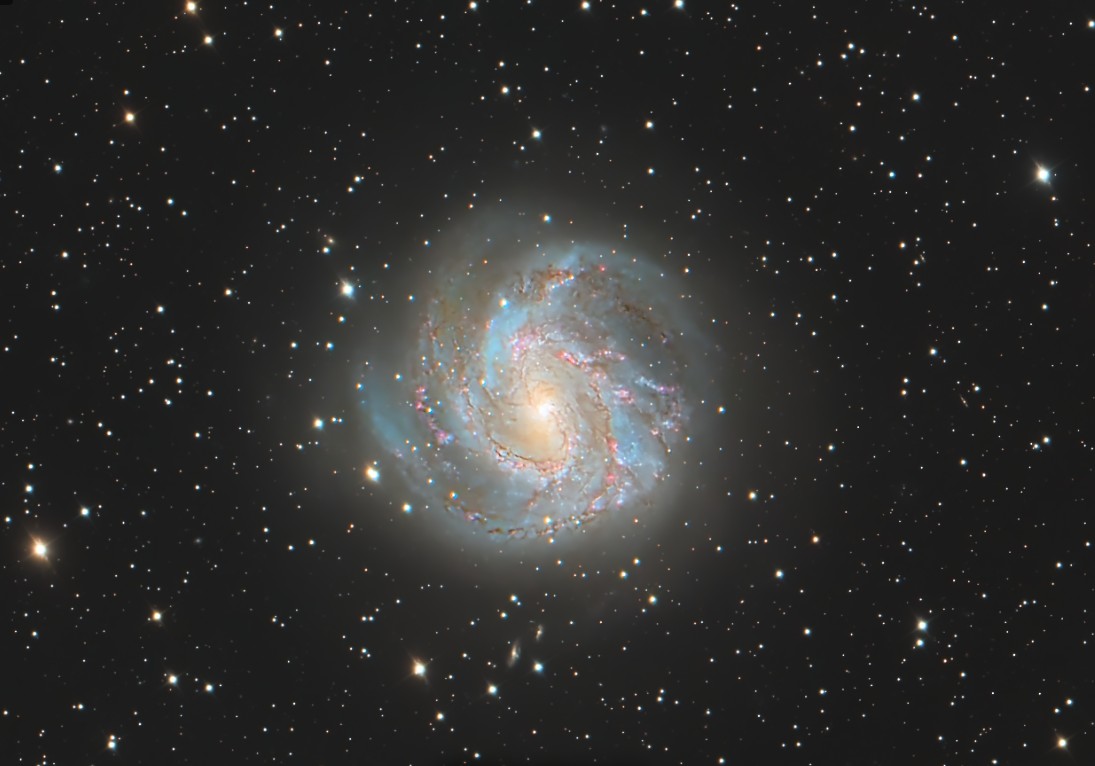
The Southern Pinwheel Galaxy as captured by Drew Evans.
18: Southern Pinwheel Galaxy (M83)
Constellation: Hydra
Object Type: Spiral Galaxy
Distance: ~15 million light-years
Apparent magnitude: 7.6
The Southern Pinwheel Galaxy (M83) is one of the closest and brightest barred spiral galaxies in the sky. Seen face-on from Earth, its sweeping arms and bright core make it a favorite for deep-sky imagers. While broadband filters are typically recommended for galaxies, M83 is packed with stellar nurseries—regions of active star formation glowing with hydrogen and oxygen emissions. Using narrowband filters like Hydrogen-alpha (Hα) and Oxygen-III (OIII) can reveal incredible detail in the galaxy’s spiral arms, highlighting glowing nebulae, young star clusters, and even supernova remnants.
You can spot M83 with binoculars, but from the Northern Hemisphere, it sits low in the southern sky, which can make it a challenge to observe or photograph. A clear southern horizon and steady skies will help you catch this beauty at its best.
Fun fact: M83 has hosted six supernovae in the last century—more than almost any other known galaxy!
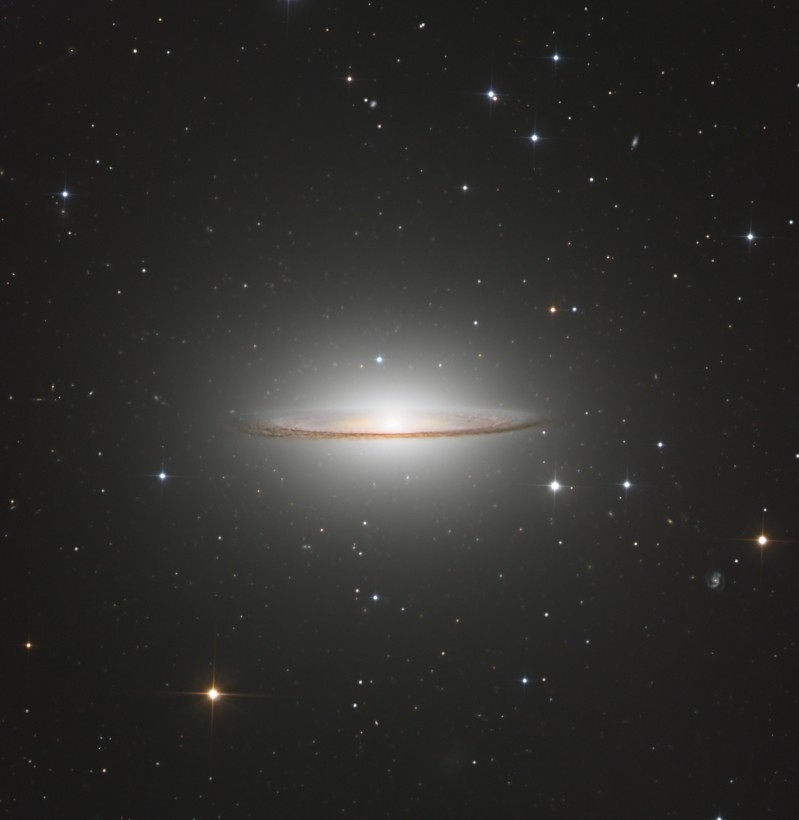
The Sombrero Galaxy as captured by Drew Evans.
19: The Sombrero Galaxy (M104)
Constellation: Virgo
Object Type: Spiral Galaxy
Distance: ~31 million light-years
Apparent magnitude: 8
The Sombrero Galaxy (M104) is easy to spot in astrophotos thanks to its bright central bulge and thick dust lane—together, they create the unmistakable shape of a space sombrero. From Earth, we see it almost edge-on, giving it that bold silhouette.
M104 has an unusually large and bright nucleus, with a prominent dust ring wrapping around its outer disk. For years, astronomers believed it had a small, light halo like a typical spiral galaxy. But observations from the Spitzer Space Telescope revealed something surprising: the halo is much larger and more massive, more like what you’d expect from a giant elliptical galaxy.
Best viewed using a medium to large telescope (6" or larger), especially under dark skies. Visual observers can spot it as a bright oval with a hint of the dust lane, but astrophotographers will get the most out of it with longer exposures that reveal the full structure and contrast.
Fun fact: M104 is one of the most massive galaxies in the nearby universe, with over 800 billion stars!
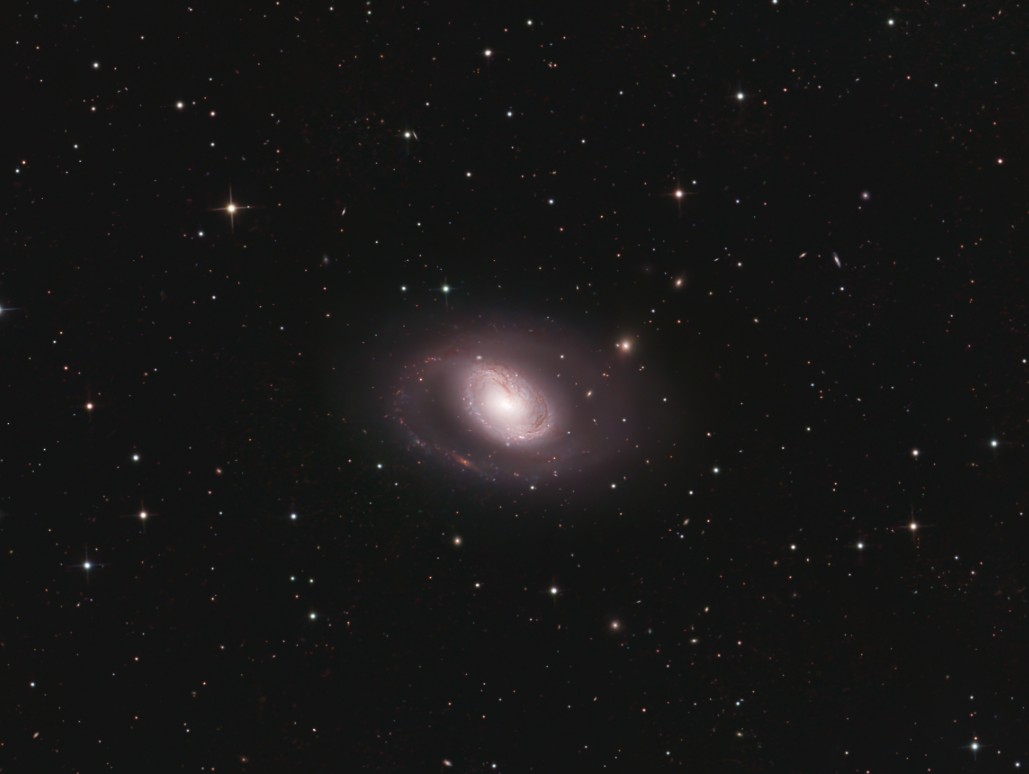
M96 as captured by Mike Manning.
20: Messier 96
Constellation: Leo
Object Type: Spiral Galaxy
Distance: ~31 million light-years
Apparent magnitude: 9.2
M96 (also known as NGC 3368) is the brightest galaxy in the Leo I Group, and roughly the same size and mass as our Milky Way. But it’s far from symmetrical—its core is off-center, and its dust, gas, and spiral arms are spread out unevenly. This lopsided shape likely comes from a past gravitational encounter with a neighboring galaxy.
While it’s bright for a galaxy, M96 can be tricky to spot with binoculars or smaller scopes. Under dark skies, a 10-inch telescope or larger will give you the best view, revealing its faint outer halo and a brighter, concentrated core. Its spiral structure is subtle, so longer exposures or image stacking can help pull out more detail.
Fun fact: M96 helped astronomers refine measurements of the universe’s expansion thanks to supernova observations.
Advanced Spring Targets
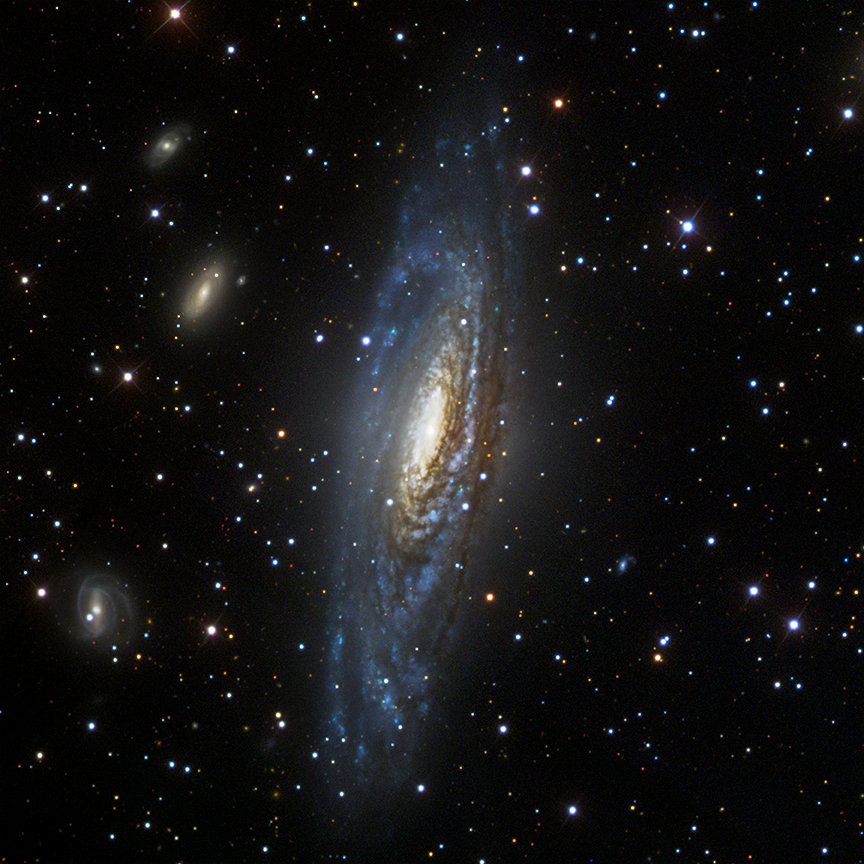
The Deer Lick Group as captured by NASA.
21: Deer Lick Group (NGC 7331 & Friends)
- Constellation: Pegasus
- Object Type: Galaxy Group
- Distance: ~40 million light-years
- Apparent magnitude: 10.4
NGC 7331 is a beautiful spiral galaxy in Pegasus, and is another galaxy that is often compared to the Milky Way in size and shape. What makes it a standout deep-sky target is the illusion of nearby companion galaxies. But despite their nearby appearance, this group of smaller galaxies are actually hundreds of millions of light-years farther away. This striking contrast creates a layered, 3D-like view in images.
This visual grouping includes galaxies NGC 7335, 7336, 7337, and 7340—collectively known as the "fleas". While they look clustered around NGC 7331, they’re not gravitationally bound to it.
For the best results, we recommend that you use a telescope with a focal length of 1000mm or more. That extra reach helps bring out detail in both NGC 7331’s spiral structure and the more distant galaxies in the background.
Fun fact: Amateur astronomer Tom Lorenzin named it after his favorite observing spot: Deer Lick Gap in North Carolina.
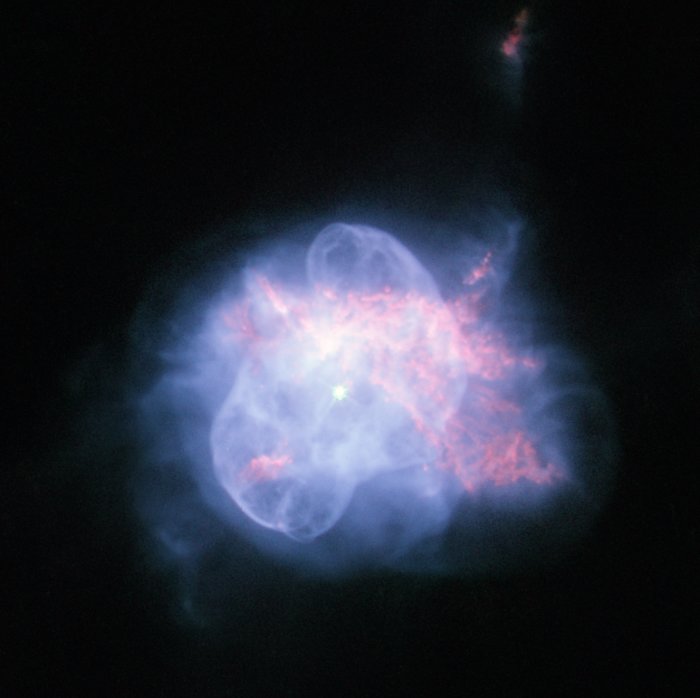
The Turtle Nebula as captured by Hubble/NASA.
22: Turtle Nebula (NGC 6210)
- Constellation: Hercules
- Object Type: Planetary Nebula
- Distance: ~4,000 light-years
- Apparent magnitude: 8.8
NGC 6210, or the Turtle Nebula, is a compact but bright planetary nebula in Hercules, named for its turtle-like shape visible in deep, high-resolution images. It features a bright inner shell about 13×16 arcseconds across, filled with intricate arcs, filaments, and knots of gas. All of which issurrounded by a faint outer halo that adds depth for astrophotographers using longer exposures.
Though small in size, it stands out in a 6mm eyepiece when paired with apertures above 8 inches and makes a rewarding target for narrowband imaging. The nebula shows signs of powerful outflows and jets from its hot central star.
For imaging, a focal length of at least 2000mm is recommended, if you want to bring out its finer details. Using narrowband filters (like OIII and H-alpha) will help reveal structure in the nebula’s layered gas shells.
Fun fact: The “shell” is made of hot, expanding gas blown off by a dying star at the center.
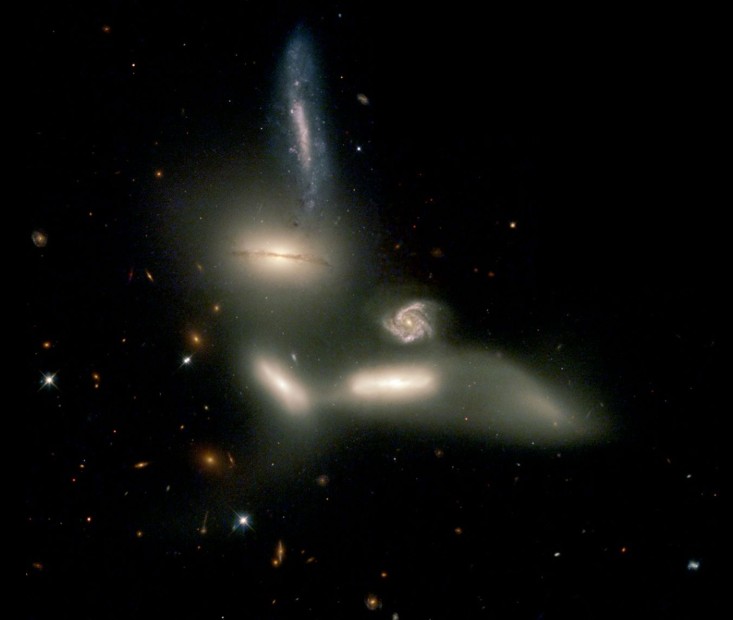
The Seyfert’s Sextet as imaged by Hubble/NASA.
23: Seyfert’s Sextet
- Constellation: Serpens
- Object Type: Compact Galaxy Group
- Distance: ~190 million light-years
- Apparent magnitude: ~14
Seyfert’s Sextet is a compact and fascinating group of galaxies, each with its own shape and character. NGC 6027 is a spiral galaxy with graceful, well-defined arms. NGC 6027d is an elliptical galaxy, more rounded in appearance and lacking the detailed structure seen in spirals. NGC 6027e appears distorted, likely due to gravitational interactions with its neighboring galaxies.
This mix of galaxy types and interactions makes Seyfert’s Sextet an exciting and dynamic target for astrophotographers. But be warned: the group is both small and faint, so capturing it clearly can be a challenge.
For the best results, you’ll want a 10-inch or larger telescope with a long focal length (2000mm or more) to pull out the detail in the galaxies' shapes and the subtle effects of their interactions.
Fun fact: Even though it appears that all six galaxies are huddled together and interacting, only four of them are gravitationally interacting with each other. One of the "galaxies" is actually just a projection—a background galaxy that happens to lie along the same line of sight from Earth. Another is much farther away, meaning it only looks close to the group, but isn’t part of the action.
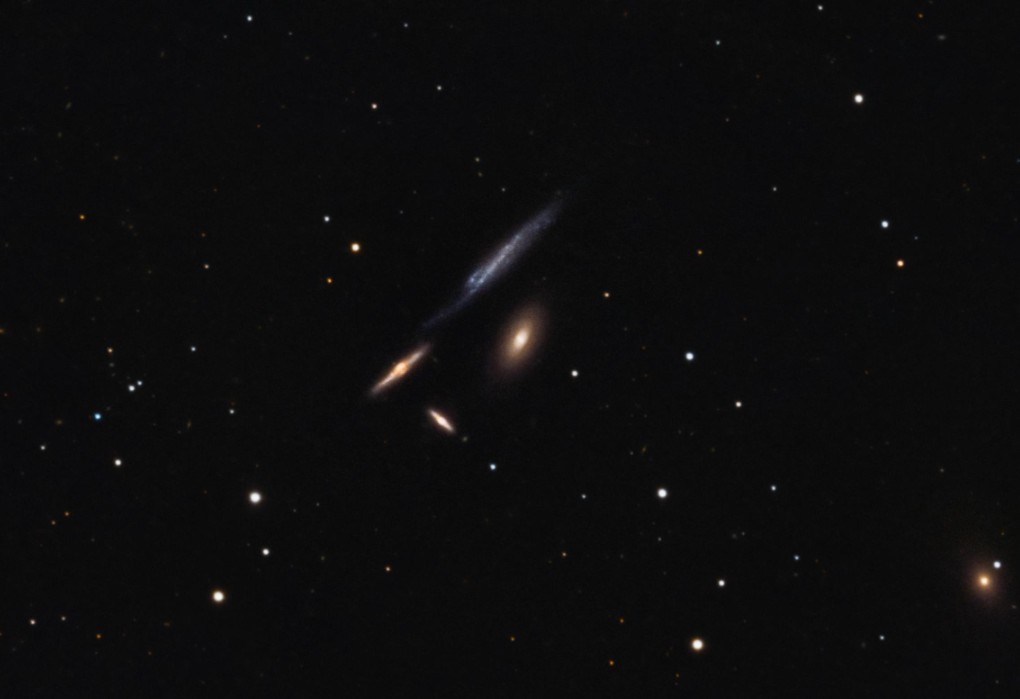
Hickson 61 as captured by Tony Alexandre Photography.
24: The Box (NGC 4169 Group)
- Constellation: Coma Berenices
- Object Type: Galaxy Quartet
- Distance: ~200 million light-years
- Apparent magnitude: ~13
Hickson 61, also known as "The Box", is a compact galaxy group in the constellation Coma Berenices. This group looks like a near-perfect square in the sky, making it one of the most visually striking galaxy clusters to capture. The bottom three galaxies are about 200 million light-years away, while the galaxy at the top is much closer, at 43 million light-years.
Despite its cool visual arrangement, this group is small and can be a challenge to capture in one image. For the best results, you'll need a telescope with at least an 8-inch aperture.
Fun fact: Each galaxy in The Box has a different structure, for example, spiral, elliptical, or lenticular. This mix gives observers a chance to compare galaxy types all in one field of view.
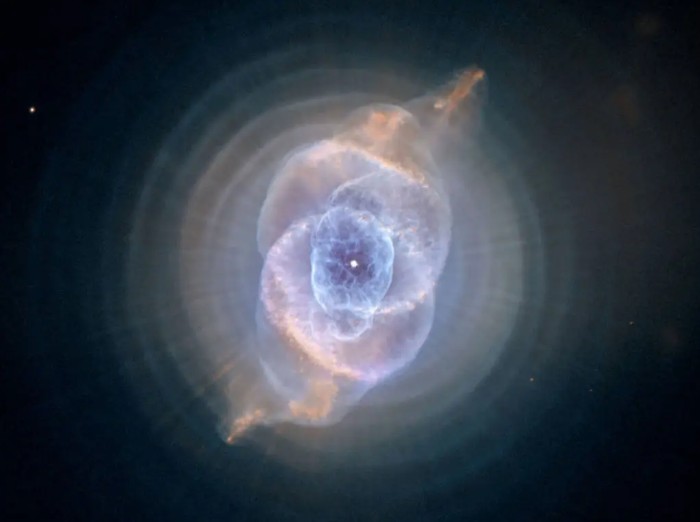
The Cat’s Eye Nebula as imaged by NASA's Hubble Space Telescope.
25: Cat’s Eye Nebula (NGC 6543)
- Constellation: Draco
- Object Type: Planetary Nebula
- Distance: ~3,300 light-years
- Apparent magnitude: 8.1
The Cat's Eye Nebula (NGC 6543) in Draco was discovered by William Herschel in 1786, but it was not properly studied until 1864. It is best known for its concentric rings and intricate filaments, all of which are lit by a hot Wolf–Rayet star at its center. The core spans just 16.1 arcseconds, surrounded by a faint halo. The Cat’s Eye Nebula is best viewed with a medium to large telescope (8 inches or more), and it’s a fantastic target for astrophotography with narrowband filters.
Fun fact: It was one of the first planetary nebulae observed by the Hubble Space Telescope—and it still stuns to this day!
Alternative Targets for Spring (Galaxy Season)
If you don’t have a large telescope to view or photograph galaxies, there’s still plenty to see!
Toward the beginning of galaxy season in early March, the constellation Orion will be high in the sky at nightfall. Orion is home to many big and bright nebulae such as the Orion Nebula, Horsehead Nebula, Rosette Nebula, and a few other common winter targets.
Toward the end of galaxy season in May, the Milky Way’s galactic center rises early in the morning around 2:00 AM. If you’re willing to stay up late, many popular summer targets like the North American Nebula, Lagoon Nebula, Eagle Nebula, and even the Milky Way itself are up in the night sky.
Take the Messier Marathon Challenge
During a brief window of a few weeks in mid-March each year, it’s possible to observe all 110 Messier objects in a single night. Amateur astronomers call this a Messier Marathon, and for serious visual observers, it is considered a rite of passage. It requires good planning, fast telescope work, dark skies, and clear weather. Check with your local astronomy club to see if they’re hosting a Messier Marathon near you!
Keep Looking Up And Let Galaxy Season Inspire You
Spring may not feature the bright nebulae of other seasons, but it does offer an array of amazing galaxies, galaxy clusters, and planetary nebulae. With the right gear and a bit of patience, you can unlock some of the most distant and fascinating objects visible from your backyard.
Start with the brighter Messier objects, and as you gain experience, challenge yourself with more advanced targets.
Clear skies—and happy galaxy hunting!