



What is Light Pollution in Astrophotography?
- 1. Understanding the Phenomenon of Light Pollution in Astrophotography
- 2. Strategies to Access Dark Skies
- 3. Measuring the Brightness of Night Sky
- 4. How Light Pollution Affects Humans and Astronomy?
- 5. What are the main sources of Light Pollution
- 6. What can be done about Light Pollution
- 7. Explore our Recommended Astrophotography Light Pollution Filters
1. Understanding the Phenomenon of Light Pollution in Astrophotography
If you live in a relatively large city, chances are that the skies above you are being attacked by an enemy all too familiar to the astronomy community: Light Pollution. Similar to the more commonly recognized pollutants in our water and air, this pollution is a form of excess unnatural lighting which fills our skies with artificial glow. This excess light can pose serious risks to humans, wildlife, and the environment around us.
2. Strategies to Access Dark Skies
One of the most important factors in successful astronomy and astrophotography is the ability to access dark skies. A peek at any light pollution map quickly reveals that dark skies are quite uncommon in 2021. The “Bortle Scale” is often referenced when discussing sky brightness/darkness, and is simply a 1-9 scale measuring light pollution in a specific area with 1 representing the darkest skies and 9 representing the most heavily light polluted. Websites such as LightPollutionMap will give you a good idea of the quality of the skies you live under, while many popular astronomy apps such as Clear Outside will give you an estimated Bortle scale rating for your location for easy reference.
3. Measuring the Brightness of Night Sky
A much more real-time measurement can be done using a personal Sky Quality Meter, such as the Unihedron Sky Quality Meter. This tool measures the brightness of the night sky in magnitudes per square arcsecond at your location, helping you to determine the best imaging locations, track light pollution growth over time, and even program your planetarium apps to more accurately reflect your skies! These measurements are especially helpful for citizen scientist projects which help to better understand the growth and impact of light pollution.
4. How Light Pollution Affects Humans and Astronomy?
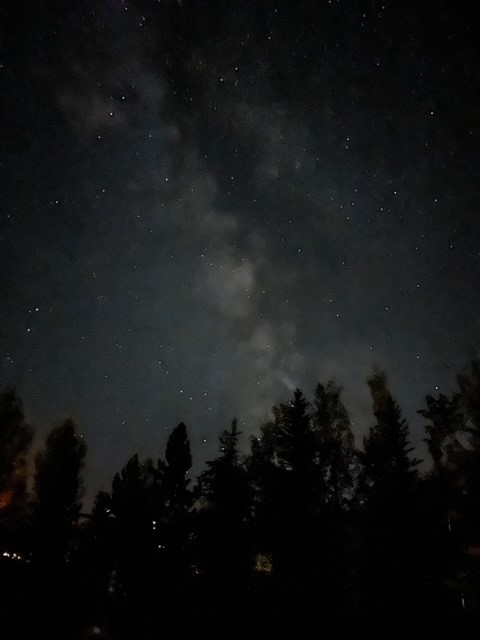
It is estimated that 80 percent of the world population lives under sky glow. As populations grow and urban development expands, dark skies will become fewer and farther between and the impacts greater and greater. Studies have shown a direct impact on human and animal sleep patterns and many other health and safety concerns. Professional astronomers are also voicing their concerns with the seemingly never-ending creep of light pollution, making it much more difficult to push astronomical equipment to its full potential. For many astrophotographers and visual astronomers, light pollution makes it nearly impossible to view and image extremely faint targets, and the average person has likely never seen the Milky Way with their own eyes!
5. What are the main sources of Light Pollution
One of the biggest struggles with light pollution is simply awareness of the general public. If you are an astronomy lover, be sure to share the knowledge of the impact of light pollution with friends and family- it benefits us all! Organizations such as the International Dark-Sky Association are a great resource for information and tips on how to mitigate the impacts of light pollution.
While light pollution comes in many forms, it is a human-caused issue which requires human solutions. Streetlights, outdoor home lighting systems, billboards, vehicle headlights and nearly any other source of artificial light are direct contributors to this issue. How society addresses the growing light pollution requires intentional changes to how we act both as individuals and as a society.
Learn more about how you can combat light pollution with broadband, narrowband, and line filters.
6. What can be done about Light Pollution
- Turn off unnecessary outdoor lighting
- Close window curtains/blinds to keep light inside
- Use lamp shields/shades around outdoor lights
- Local governments may often apply lamp shades or redirect streetlights upon request
- Use energy friendly lighting
- Explore Light-Pollution Filters for Visual Astronomy
