



How to Clean a Telescope: Step by Step Guide
By Chris Cook & Brian Fulda
Cleaning a telescope depends on which type of telescope you have, but usually involves removing dust & debris with a brush or blower and then cleaning the optics. The steps to clean a telescope are different for telescopes with lenses vs. telescopes with mirrors. In this guide, we’ll go over how to clean both.
Note Before Cleaning
If your telescope is only a little dusty, it likely doesn’t need to be cleaned at all! Most telescopes can function perfectly fine even with a moderate layer of dust or debris on the front lens. In many cases, we recommend leaving your telescope alone as accidents and damage can occur while cleaning a telescope if you’re not careful. Only if your telescope has a thick layer of dust or grit should you proceed carefully with the steps below.
How to Clean A Telescope Lens
For Refractor, Schmidt Cassegrain, & Maksutov Telescopes
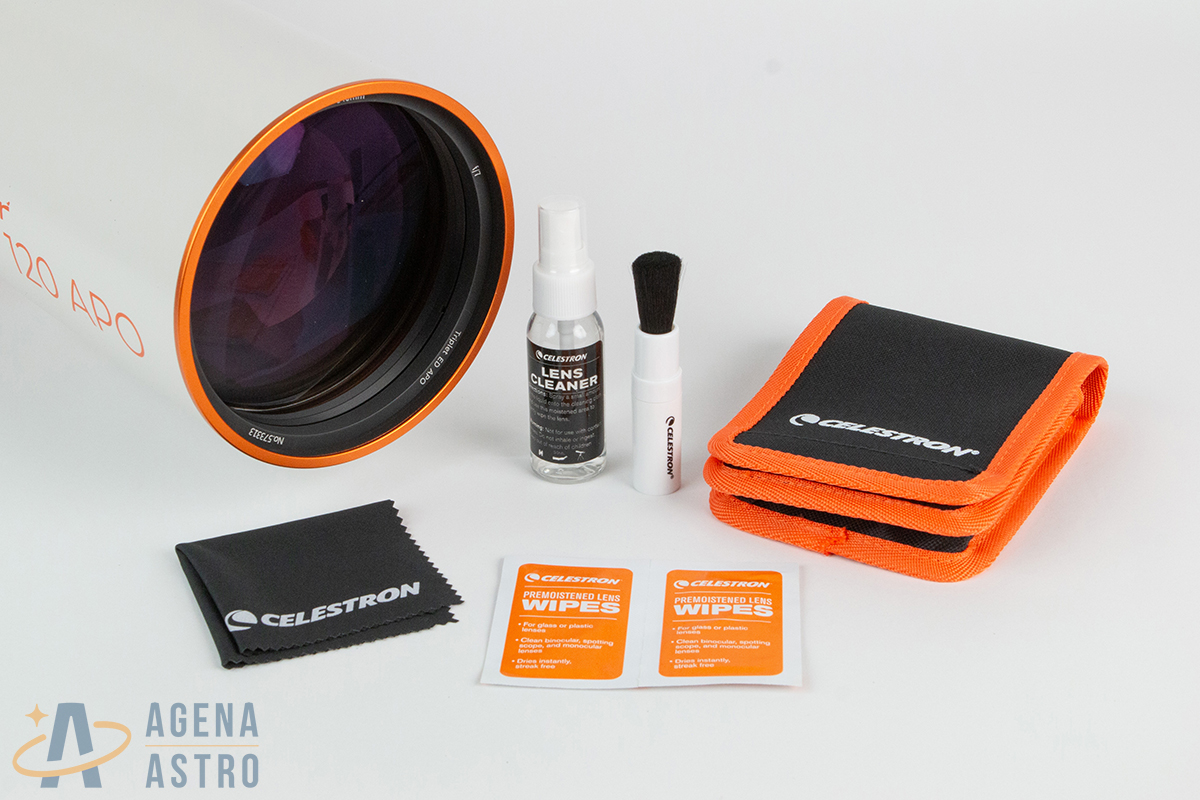
You will need a few items to properly clean your telescope’s lenses. If you’d like to skip buying each one individually, we highly recommend this Celestron Lens Cleaning Kit. Here is the full list of items you will need:
- Microfiber brush or rocket air blower
- Lens cleaning tissues or 100% cotton balls
- Optical cleaning solution
Step 1: Remove dust and debris
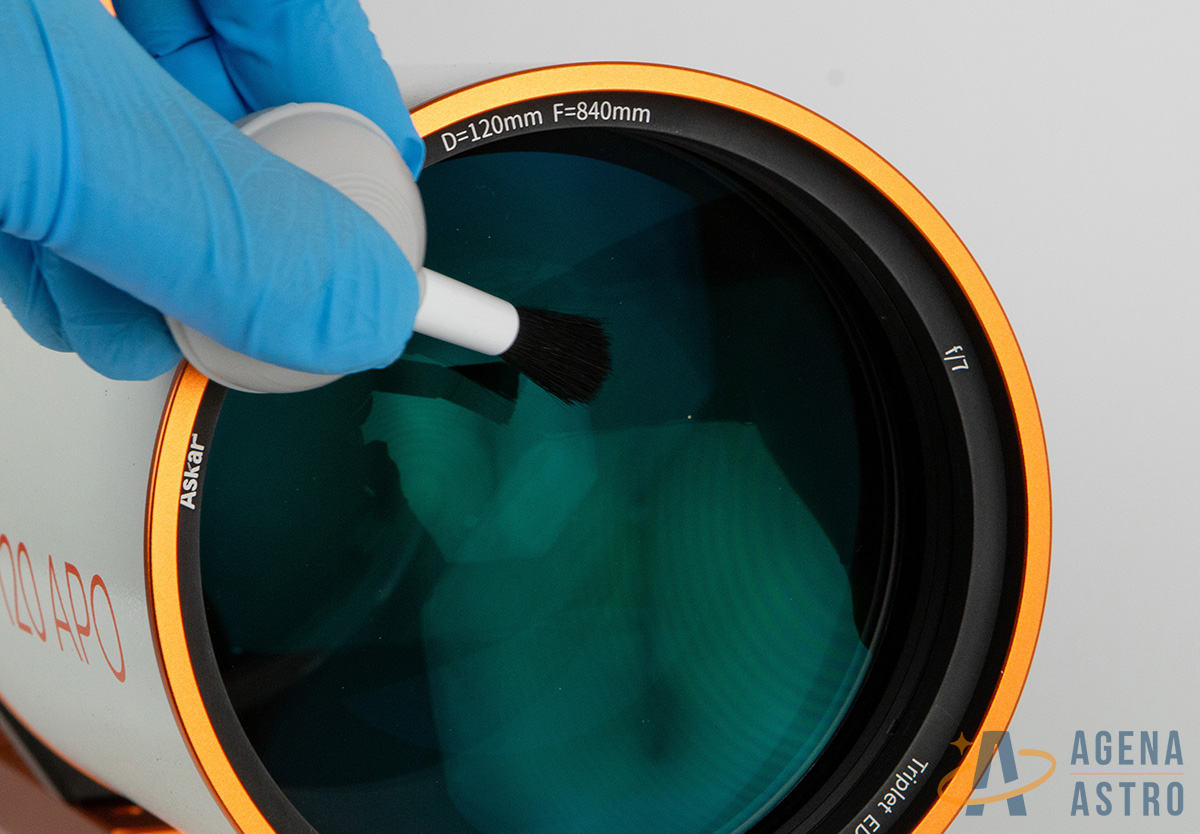
You can do this using a microfiber brush or air blower bulb. Just let the weight of the brush glide over the surface or blow off the dust. This should remove any larger loose debris. We don’t recommend using compressed air as it can permanently damage optical coatings.
Step 2: Clean the front lens
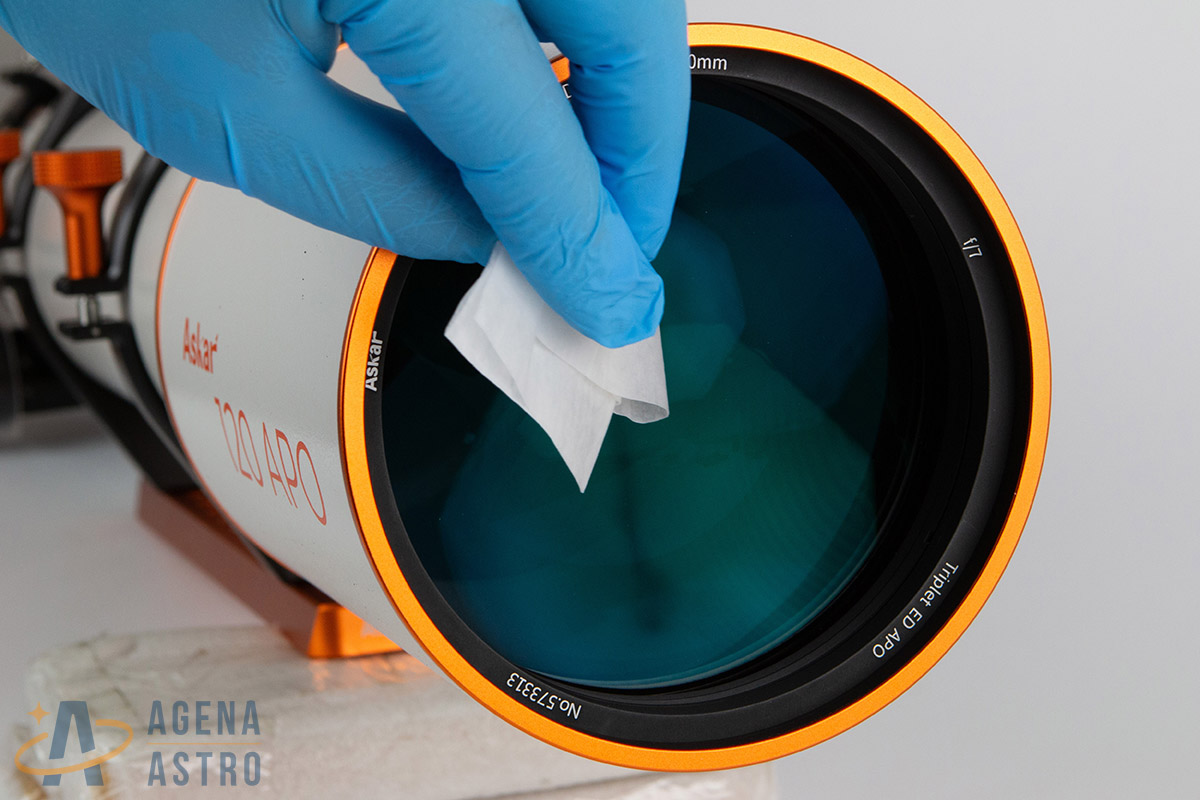
With the lens pointed upwards, spray the surface with an optical cleaning solution several times so it is evenly coated. Let the solution soak for about 30 seconds. With a soft lens tissue or cotton ball, gently wipe the surface in one direction and then discard. You will want to use a new clean tissue or cotton ball for each pass. Doing this ensures that any removed dirt is not reapplied to the lens.
Step 3: Make multiple passes until the lens is clean
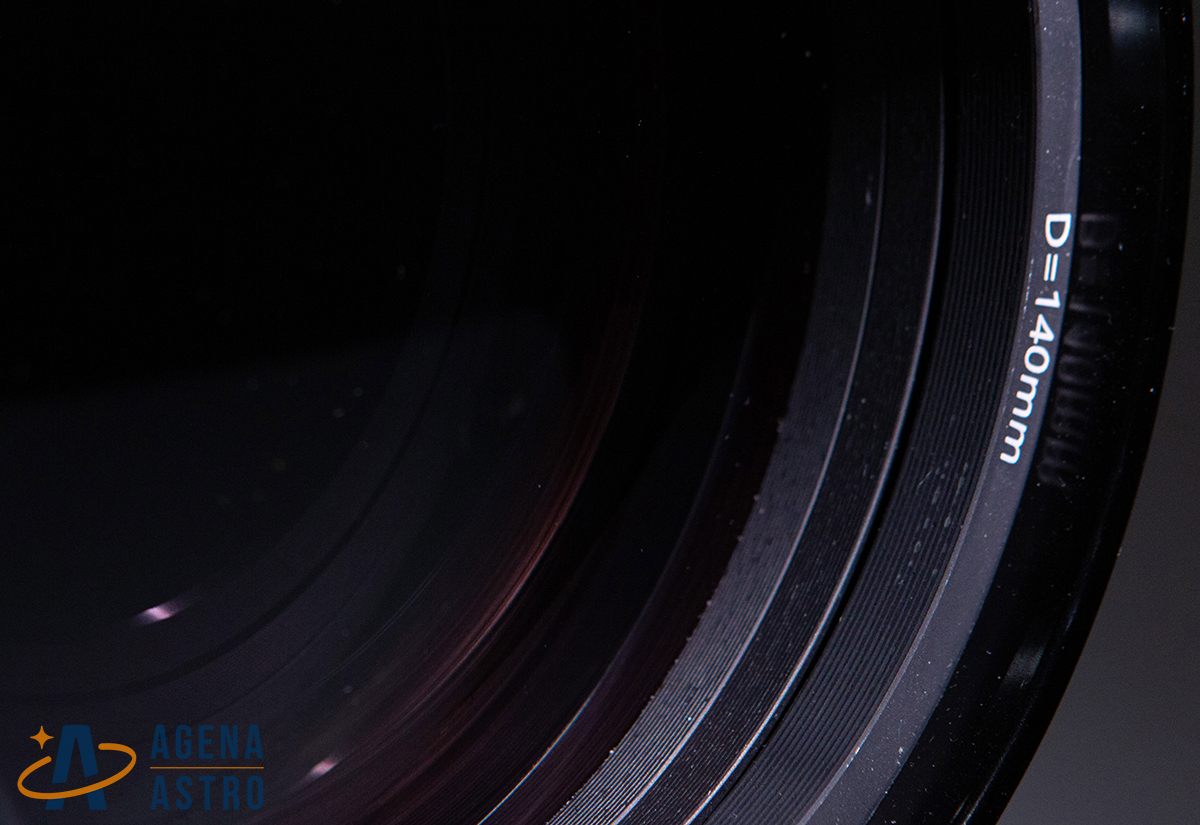
Make several passes to ensure all of the solution has been removed. Check the lens for any remaining dust, dirt or contaminants. Repeat the process until the lens is clean. Remove all cleaning solution before covering the lens and storing the telescope in its case.
How to Clean A Telescope Mirror
For Reflector, Dobsonian, & Classical Cassegrain Telescopes
Cleaning the primary mirror on a telescope is a bit more challenging as it requires you to remove the mirror and its cell from the optical tube. This will require you to remove the clips that hold the mirror in place and recollimate the telescope once complete. For these reasons, we don’t recommend cleaning these telescopes unless you absolutely have to.
To clean a telescope with mirrors, you will need:
- Plastic dish rack
- Soft bath towel
- Non-abrasive dish soap
- Distilled water
- 100% cotton balls
- 91% isopropyl alcohol (optional)
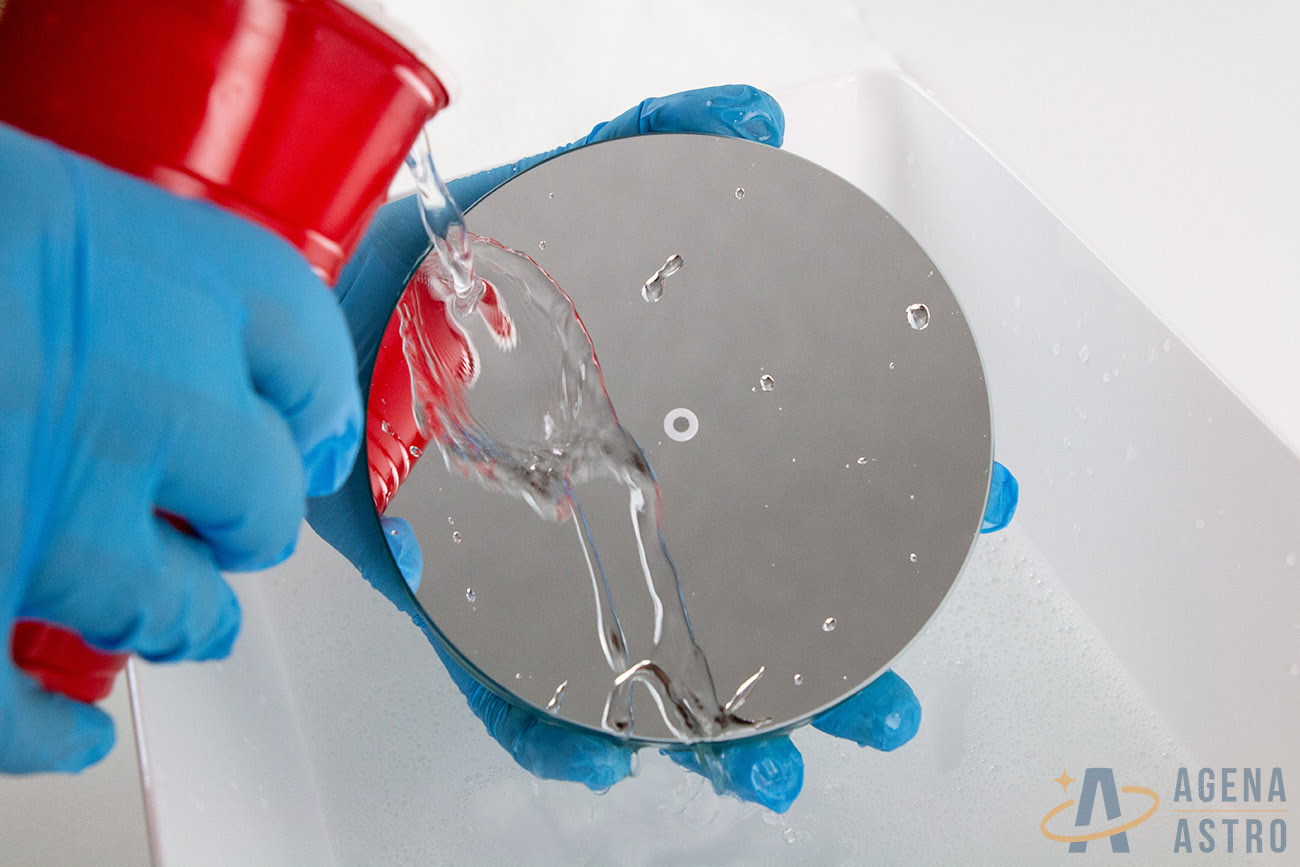
Step 1: Rinse the mirror
Place the dish rack or towel at the bottom of a sink and place the mirror in the sink. With the reflective side of the mirror now facing upward, turn on the faucet for several minutes and let room temperature water run over the mirror. This will help loosen and remove any larger pieces of dirt or debris on the surface. Using a dish rack will help keep the mirror angled upward.
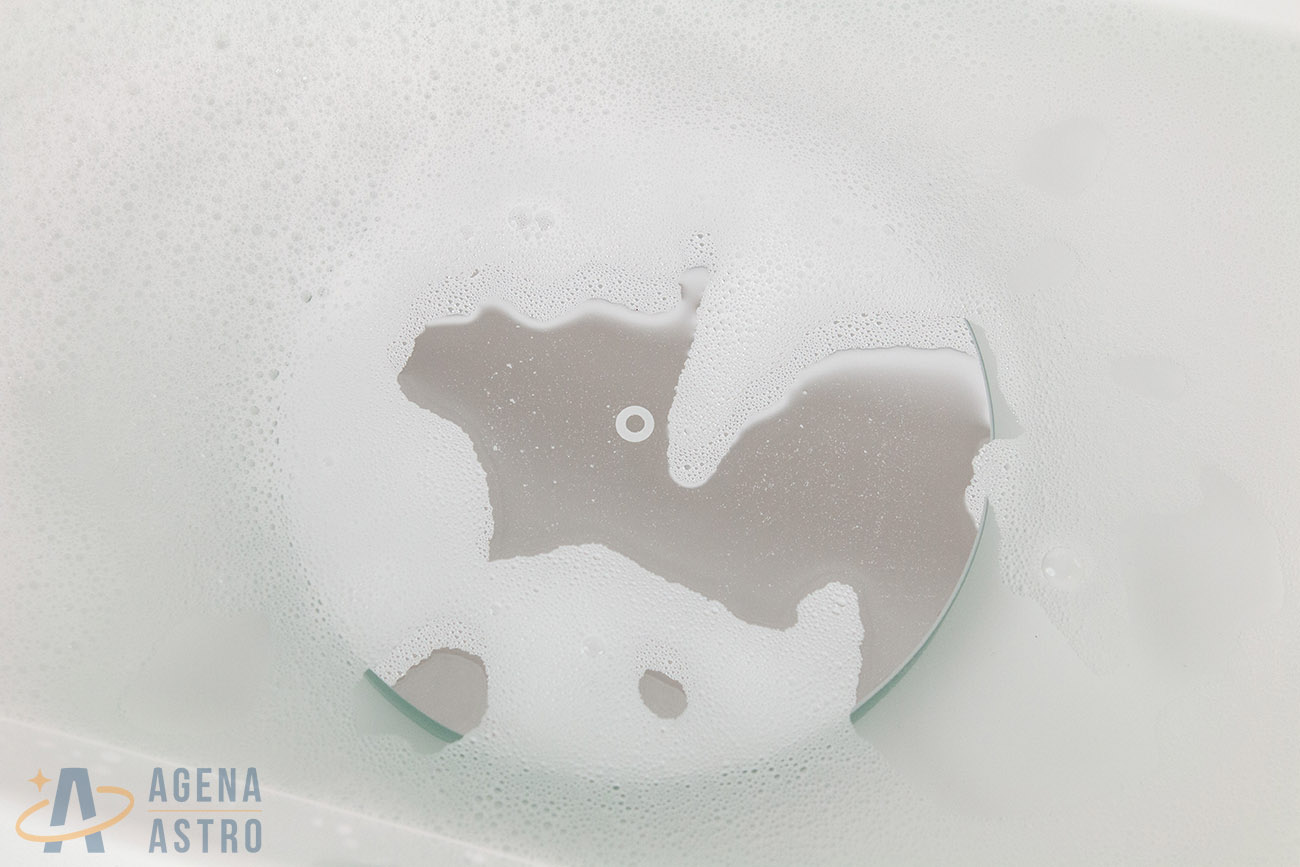
Step 2: Clean the mirror with soapy water
While the mirror is being rinsed, mix up a bowl of soapy water at room temperature with non-abrasive dish soap. One drop of soap is enough. Holding the sides of the mirror, pour the soapy water onto the surface of the mirror and soak it for several minutes, then rinse with room temperature faucet water. Repeat this process, but this time gently drag a soapy wet cotton ball across the mirror’s surface. Use a new cotton ball for each pass and discard the used cotton balls as you go. Once the entire mirror has been cleaned, rinse it with distilled water.
One optional step is to use 91% isopropyl alcohol and rinse the entire surface of the mirror. This will remove any remaining water drops and prevent water spots from forming.
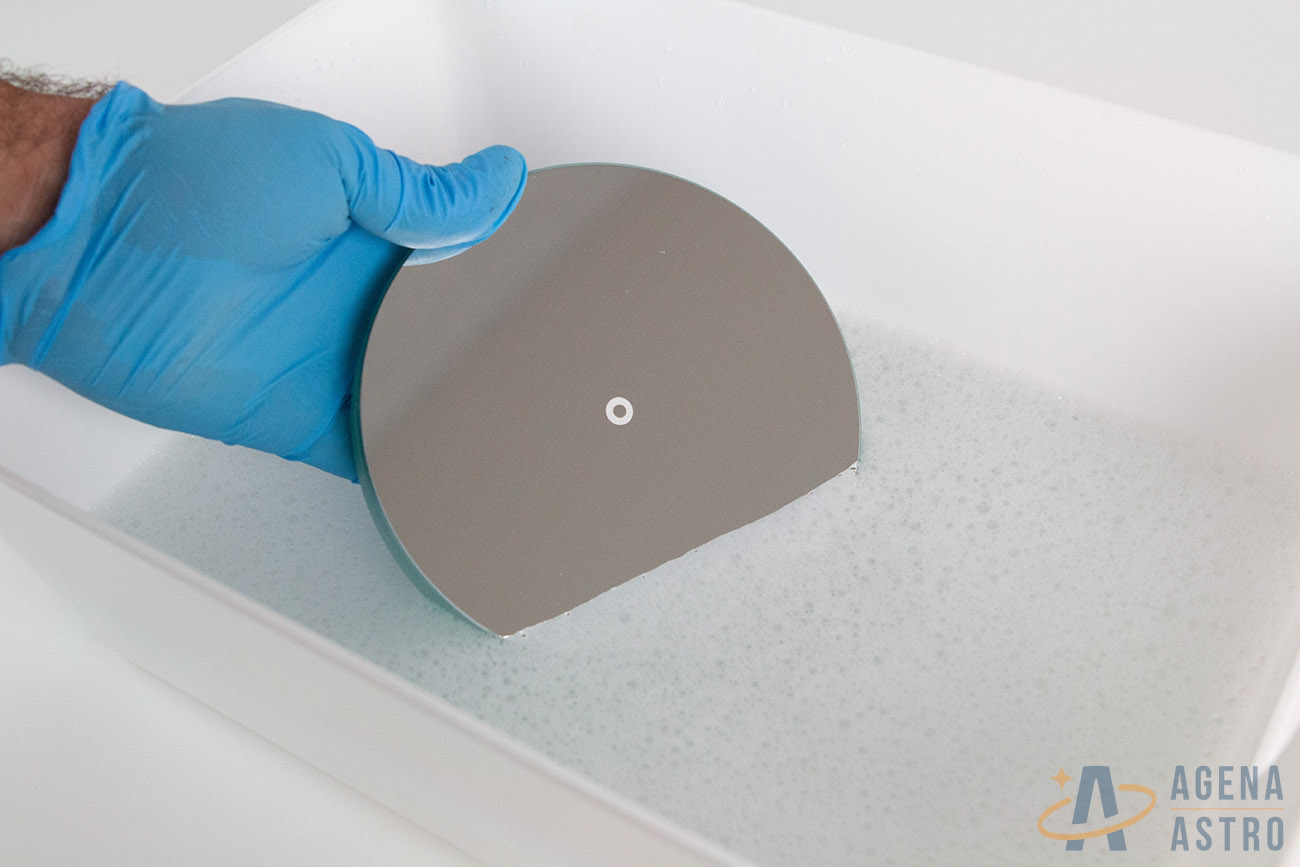
Step 3: Let the mirror dry
Set the mirror vertically on its edge to air dry for a few hours on a soft, clean towel placed on a dish rack. Once dry, reinstall the mirror into your telescope and recollimate it using collimation tools.
How to Clean A Telescope Eyepiece
Telescope eyepieces are quite easy to clean. Like an objective lens or corrector plate, modern eyepieces almost always have durable multi-layer coatings. Make sure these coatings are not damaged before cleaning.
To begin, use an air blower bulb or soft camel hair brush to remove any large loose deposits on the lens. Next, spray a small amount of optical cleaning solution to a lens tissue or microfiber cloth. Gently rub the lens, rotating the tissue or cloth to a clean damp section as you go. If the lens looks clean, you’re done! Repeat the process if there are still specks of dirt or smudges. If the lens is still not clean, it could have a fair amount of microscopic oil residue on the surface. This oil can come from the environment or your eyelashes and skin as you observe. In this case, use a ROR solution (Residual Oil Remover) and continue the cleaning process as described above. Once your optics are clean, you are now ready to explore the cosmos with your telescope while also enjoying clear crisp views.
Tips to Keep Your Telescope Clean
Most telescopes and eyepieces become dirty from neglect or improper storage. We strongly recommend using the dust covers and dust plugs that came with your telescope to cover the optics after use. If you don’t have these, you can shop for replacement dust plugs and end caps on our website.
We also strongly recommend purchasing a telescope case to keep it protected when not in use or when traveling. Cases not only keep your telescope clean from dust, but they protect the delicate optics inside from bumps or slight drops.
Disclaimer: Telescopes are very fragile, and caution must be taken while following these steps carefully. Agena Astro is not responsible for any damage caused to telescopes or optics from following the steps in this article.