



How to View the Annular Eclipse 2023
On October 14th, 2023, an annular solar eclipse will be visible across parts of North and South America. This eclipse will be popular as it will be visible for over 1 billion people on planet Earth! This annular eclipse is also being named as the warmup to the main event, which is the total solar eclipse occurring on April 8th, 2024
What is an annular eclipse?
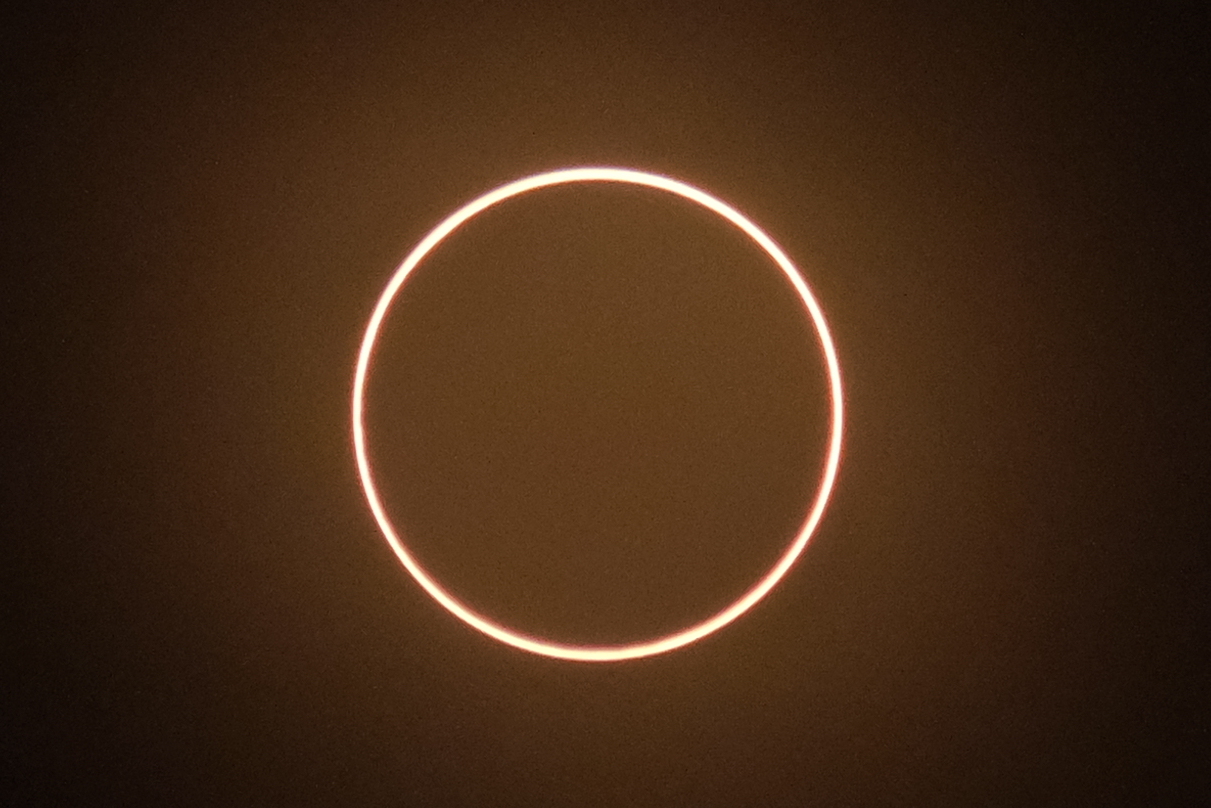
An annular eclipse is when the Moon passes in front of the Sun, but the apparent size of the Moon is smaller than the Sun. This type of eclipse, called an annular eclipse, causes a ‘ring of fire’ effect, where only the outer edge of the Sun can be seen.
Annular vs. Total Solar Eclipse: what’s the difference?
Unlike a total solar eclipse, an annular eclipse only blocks out a portion of the Sun. Because of this, you will not see the Sun’s corona — or outer atmosphere — during an annular eclipse. Also unlike a total solar eclipse, you will need to wear proper eye protection the entire time.
What will one see during an annular eclipse?
What you see during an annular eclipse depends on your location and the weather. To see the ‘ring of fire’ effect, you will need to be in the path of annularity. This is a path, roughly 100 miles wide, from which you’ll be able to see the annular solar eclipse on October 14, 2023.
Outside of this path, the solar eclipse will still be visible as a partial you won’t be able to see the ‘ring of fire’ effect. The partial solar eclipse will be visible from the entire lower 48 United States.
Of course, to see anything during a solar eclipse, you will need to have a clear view of the Sun without clouds, meaning it's best to go somewhere with good weather.
How can I see the annular solar eclipse 2023?
To see the annular eclipse 2023, you will need to be in the path of annularity, which will allow you to view the ‘ring of fire’ effect. Outside of this path, the eclipse will still be visible, but only as a partial eclipse. No matter where you are, you need to use proper eye protection and/or use a solar filter for your camera, binoculars, or telescope.

Where can I see the 2023 annular eclipse?
The path of annularity for the October 14th, 2023 solar eclipse will travel in a southeast direction from the northwestern United States across Central America and finally end off the coast of Brazil.
In the US, it will begin on the coast of Oregon at 9:16am PT, then continue southwest through Nevada, Utah, New Mexico, and finally over the coast of Texas at 11:55am.
After this, it will travel over parts of Mexico, Belize, Guatemala, Honduras, Nicaragua, Costa Rica, Panama, Colombia, and finally Brazil, where it will end at sunset.
Popular website timeanddate.com offers detailed eclipse maps, including simulated views of what the eclipse will look like from your location. GreatAmericanEclipse.com also offers high resolution eclipse maps and more information.

Do I need eye protection to see the annular eclipse?
Yes! Because annular eclipses never completely block out the Sun like a total solar eclipse does, you will need eye protection to view it at any point. Here at Agena Astro, we carry a variety of solar eclipse glasses for sale (all of which are certified by the ISO) to help you safely view the solar eclipse.
What do I need to see the annular eclipse through a camera lens, binoculars, or a telescope?
If you have a camera lens, binoculars, or a telescope and wish to view or photograph the eclipse through it, you will need a solar filter. We carry a variety of solar filters for sale for nearly any optic you may have.