



Top Night Sky & Astronomy Events in December 2021
1. What to Expect in the December Skies?
It’s time to round out the calendar year with an overview of the December skies. This time of year is mostly consumed by the holiday season, time with family and friends, and preparing for the adventures that a new year brings. However, December is also a prime time for astronomy and astrophotography for many folks taking advantage of the longer evenings and clearer skies.
2. December Solar Observing & Imaging
November showed some promising solar activity, and this activity is expected to continue and offer terrific opportunities for observing and imaging large filaments, sunspots, flares, and prominences. Whether you are looking for a dedicated solar telescope or a simple add-on filter for your current equipment, there are plenty of tools out there to get you started on the right track.
Daystar Quark
The Daystar Quark comes in multiple models to provide options for viewing both solar prominences and the solar chromosphere in either hydrogen-alpha, calcium, magnesium, or sodium. These filters simply slide into the eyepiece slot of your diagonal or can be attached directly to the focuser.
The Daystar Quark is available for multiple telescope designs, so be sure to select the model best suited for your telescope (ex: refractor vs. SCT). Pairing this with an additional energy rejection filter such as the Optolong UV/IR cut filter is also often recommended to help ensure the longevity of your solar gear by simply screwing the filter onto the telescope end of the Quark filter.
Daystar Solar Scout
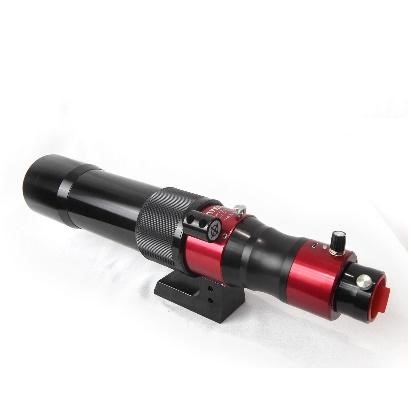
If you enjoy the simplicity of not having to add filters or adjust imaging trains to capture solar images, then the Daystar Solar Scout dedicated solar scope may be the right choice for you. The Solar Scout provides 60mm of aperture and is a dedicated hydrogen-alpha solar telescope, offering high contrast views of the solar surface and some broader solar prominences. The included solar finder helps to easily and safely locate the sun to have you up and running in no time.
Astrophotography Camera
The ZWO ASI174MM astronomy camera remains one of the most frequently recommended cameras for dedicated solar imagers, though many astrophotographers may choose to utilize their current deep sky imaging cameras for solar imaging as well. Fantastic solar imaging results are being produced with monochrome cameras such as the ZWO ASI1600MM and ZWO ASI183MM at various focal lengths, offering some flexibility and cost savings by serving as a multi-purpose camera.
Accessory
Solar imaging presents unique challenges, and “newtons rings” are perhaps the most common. Newtons rings appear as alternating light and dark bands across the solar field when imaging the Sun in hydrogen-alpha. To resolve this, simply place a tilt adapter such as the ZWO T2 Tilt Adapter before the camera in the imaging train to make small adjustments to the focal plane and remove this blemish.
3. Moon & Planets
The December New Moon arrives on November 4th, while the Full Moon returns on December 18th. Planning your observing and imaging sessions around the New Moon will help to ensure your eyes and camera sensors are being given the best opportunity to capture your targets. Venus, Jupiter, and Saturn will all continue their journey through the December skies as well, with Venus clearly establishing itself as the second brightest object in the sky, bested only by the Moon. Be sure to point your telescope toward the Moon and Venus on December 6th to witness our neighbors pass within only 3 degrees of each other from our perspective. Here are some of our recommendations for your December planetary sessions:
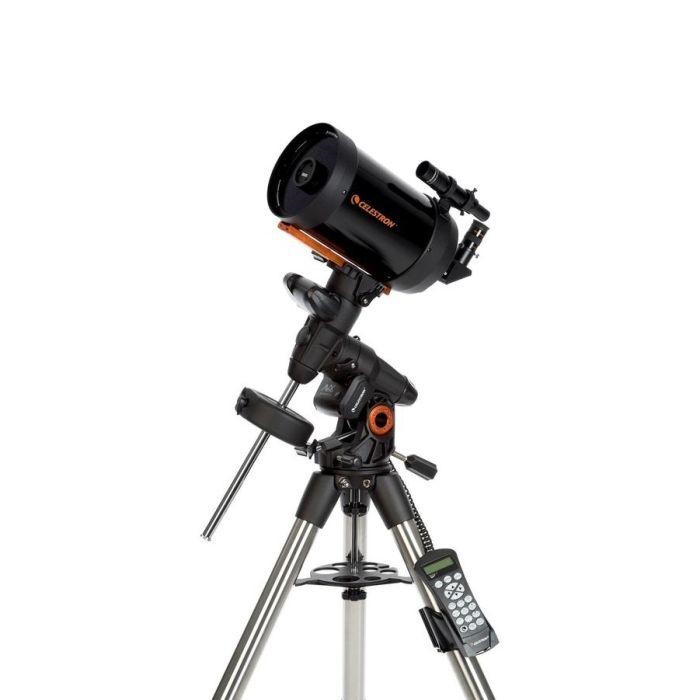
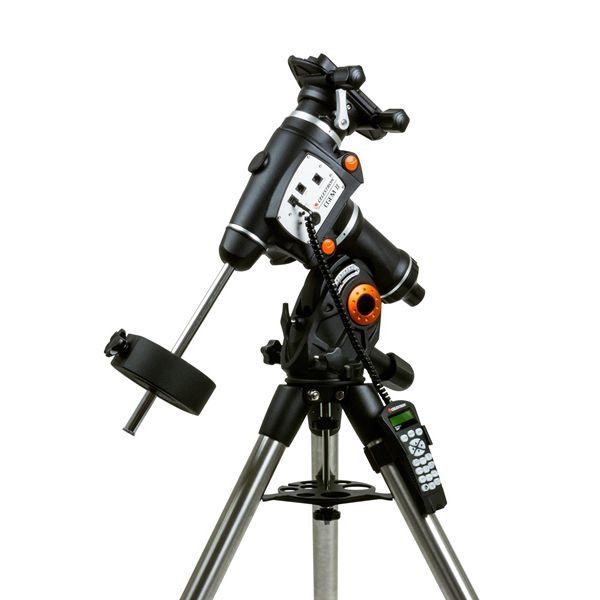
For the optimum observing or imaging experience within our own solar system, focal length should be one of your primary considerations. As a result, telescopes such as Celestron’s Schmidt-Cassegrain lineup come highly recommended for both observing and imaging with packages available for all levels of experience. The Celestron Advanced VX 6" Schmidt-Cassegrain Telescope Package (figure 2) offers 1500mm of focal length with an optical tube that weighs only 10lbs on a mount capable of supporting 30lbs worth of gear! For even greater reach and close up shots of our solar system, the Celestron Advanced VX 11" Schmidt-Cassegrain Telescope Package pushes the same portable Celestron Advanced VX mount to its full capability with a 27lb optical tube and 2800mm of focal length. If more accurate tracking is needed for imaging with the 11” Schmidt-Cassegrain, a slightly larger mount such as the Celestron CGEM II Computerized Mount and Tripod will provide the stability needed to capture brief images of solar system targets or much longer exposures for deep sky objects.
4. DSOs (Nebulae, Galaxies, Clusters)
The cool, crisp air that typically rolls in around December can make for an ideal time of year to image deep sky objects. Those who typically experience turbulent atmospheres full of clouds and moisture can expect to see a bit more clarity in the evening skies, opening the window to cleaner images of nebulae, galaxies, and other Deep Sky Objects (DSOs). Let’s look at some commonly sought out DSOs for December and the tools you’ll need to capture these beautiful regions of the sky.
Constellation: Orion
Observing
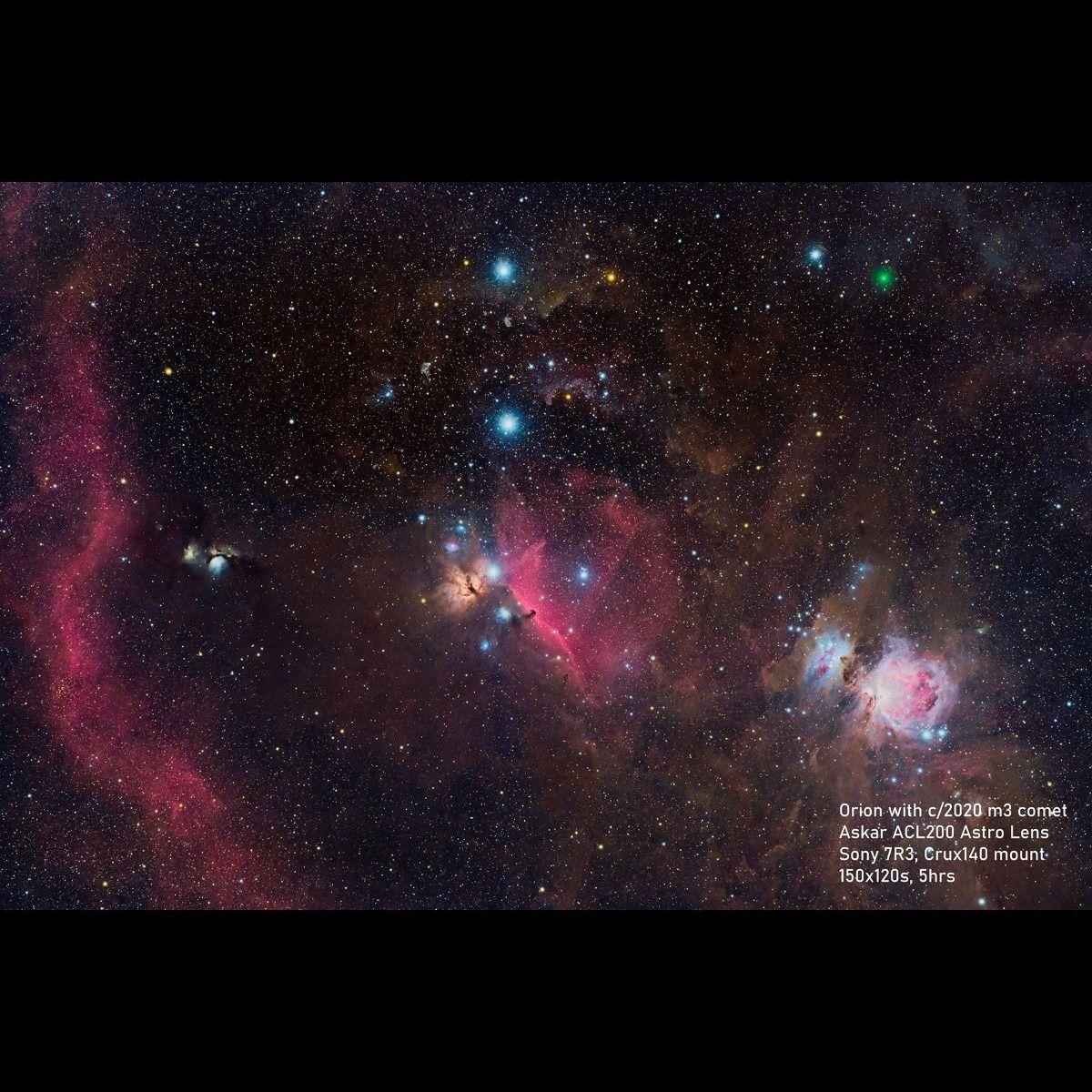
Perhaps the most popular deep sky object in all of astrophotography has returned to the evening skies! The entire constellation Orion offers incredibly detailed and colorful targets for anyone, from the beginner observer to the veteran astrophotographer. Even a small refractor telescope such as the Celestron StarSense Explorer can be the perfect tool for the first-time telescope user to witness the glow of the Orion Nebula over 1,000 lightyears away. Celestron’s StarSense sky recognition allows you to simply attach your smartphone to the telescope and use it as your navigation tool through the cosmos. With 660mm of focal length, this is a perfectly affordable introductory tool for widefield observing.
Imaging
Due to the abundance of targets in Orion available for framing, we highly recommend widefield imaging rigs to capture this region. For ultra-widefield imaging, the Askar lineup of portable refractors is at the top of our list! The Askar 30mm FMA130 f/4.5 Triplet Apo, Askar 40mm FMA180 f/5.5 Triplet APO, Askar 50mm FMA230 f/5.5 Triplet APO, and Askar 200mm ACL200 offer superb color correction and minimal chromatic aberration. These telescope lenses can also double for terrestrial photography, making it a perfect package for the avid photographer. Check out astrophotographer Nico Carver’s review of the Askar ACL200 and comparison to the respected Canon 200mm f/2.8 L II.
Christmas Tree Cluster/Cone Nebula
Observing
It seems only fitting to turn some attention to the Christmas Tree Cluster, officially part of NGC 2264, during the month of December. The Christmas Tree Cluster itself is visible to the naked eye in dark skies and even more apparent with a pair of binoculars or a small telescope. The Celestron NexStar 130SLT computerized telescope offers 650mm of focal length to allow for observations of wide field areas, or simply add a barlow lens such as the GSO 1.25" 2x Barlow Lens to double the magnification in each of your eyepieces for a closeup view of individual stars within the cluster. To truly upgrade your observing experience, consider taking advantage of the Celestron NexStar 130SLT’s 2” compatible focuser by upgrading to a 2” eyepiece for an even fuller field of view. The Pentax 2" 30mm SMC XW30-R Eyepiece offers weatherproof construction, high refraction and low dispersion glass to take your observing to the next level with a 70-degree apparent field of view and 20mm of eye relief. The difference in the observing experience from 1.25” eyepieces to 2” eyepieces is noticeable, so take advantage of the Pentax holiday sale!
Imaging
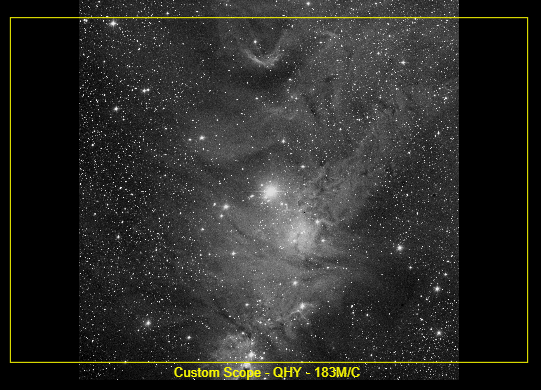
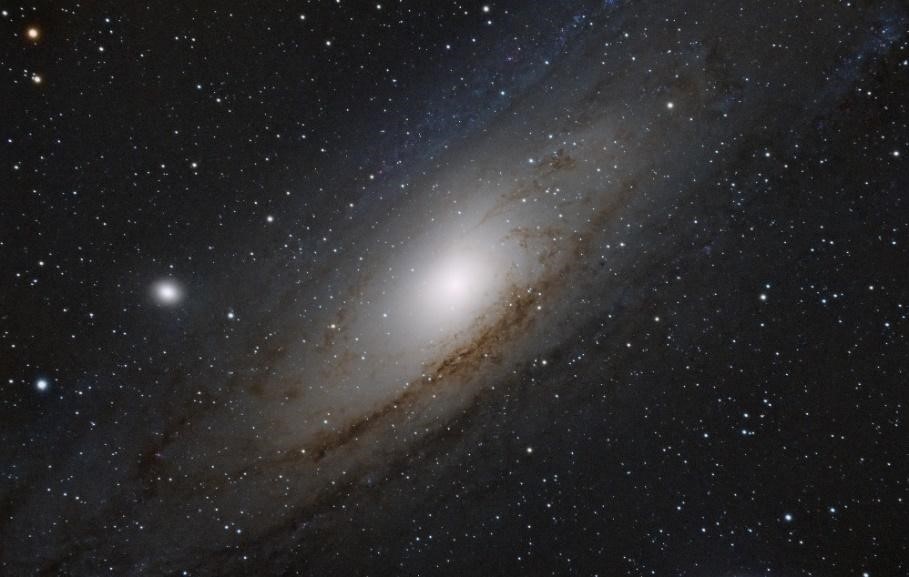
The Christmas Tree Cluster/Cone Nebula is another target well suited for widefield photography, yet slightly longer focal lengths can offer a different perspective on the finer details of this region. The recently released Founder Optics FOT86 ED 86mm f/6 Triplet provides 560mm of focal length and comes with an included field flattener to ensure your images are captured with a flat field and minimal color distortion across the frame! The screenshot below from www.Astronomy.tools Field of View Calculator shows how the Christmas Tree Cluster can be framed using the Founder Optics FOT86 and a compatible camera such as the QHY 183 Cooled Astronomy Camera. Astrophotographer Lucas Maguire recently used his Founder Optics FOT86 to capture the Andromeda Galaxy, and the results from his first imaging session below show a lot to be excited about with this new refractor.
For even greater resolving power at higher magnification, Founder Optics has also released the Founder Optics FOT106 106mm f/6 Triplet with 636mm of focal length. This telescope pairs nicely with the QHY 294 Cooled Astronomy Camera, available in both color and monochrome models.
5 Astronomical Events in December
The following astronomical events take place in December and require nothing more than the naked eye and clear skies to observe. To maximize your observing experience, many of these events will be best viewed with a pair of binoculars, such as the Celestron SkyMaster 18 40x80 Zoom Binocular which will allow for wide viewing to locate targets before zooming in for a closer view!
- December 3: Venus at maximum brightness
- December 4: New Moon
- December 6: Moon and Venus pass within only 3 degrees of each other!
- December 10-16: Comet Leonard C/2021 A1 (Leonard) at highest brightness and ideal location for observing and imaging!
- December 14: Geminids meteor shower peaks, with as many as 120 meteors per hour possible under dark skies!
- December 19: Full moon
- December 21: Northern Winter Solstice brings peak amount of darkness for the Northern Hemisphere, followed by progressively more daylight. Enjoy the darkness while you can!
- December 22: Ursids meteor shower peaks near Polaris