



Top Telescopes & Setup For Galaxy Season
1. Introduction to the Galaxy Season
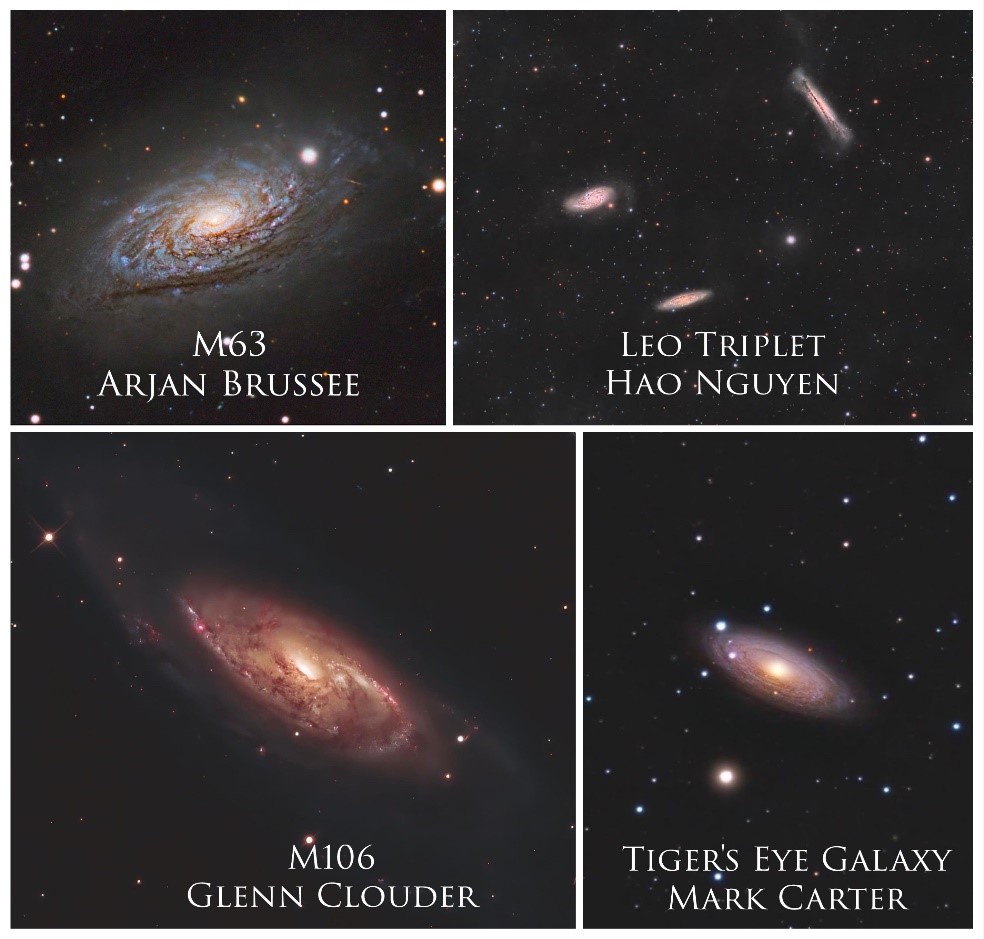
As the Northern Hemisphere plunges into springtime, astronomers and astrophotographers find themselves entering what is commonly referred to as “galaxy season.” This time of the year signals the end of astronomy imaging of many of the large popular winter nebulae, while bringing literal tons of galaxies into our night skies. As the targets get smaller and farther away for imaging, having adequate focal length and aperture in your telescope to capture the faint details of distant galaxies becomes even more critical! While it’s easy to understand how the galaxy season impacts what we can image, let’s look at exactly what causes this shift in our evening skies and review some of the telescopes best suited for the coming months.
2. The Reason for the Galaxy Season
To make sense of why springtime brings more galaxies to the northern skies, it’s important to remember the basic orientation of our world within the cosmos. While we carry on with our day to day lives, Earth is rotating at speeds of nearly 1,000mph upon its own axis every 24 hours, allowing us to view the stars once the Sun has “set.” More importantly to this topic, Earth is also flying through space at around 67,000mph as it orbits the Sun over the course of the year. It is this change in our physical placement in orbit around the Sun that causes the landscape of the evening sky to change over time. As Earth moves through orbit, the regions of space that become visible at night also change, revealing primarily regions of our own galaxy during some months, and then pointing outward toward densely populated regions of galaxies during others. As shown in Figure 1 below, springtime brings many galaxy-rich constellations into the northern night sky to reveal many of the most popular galaxies for astrophotographers.
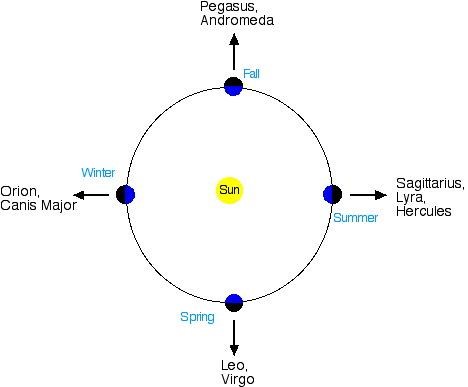
Figure 1
3. Our Recommended Gear for Galaxy Season
To capture images of galaxies millions of lightyears from Earth you will find that, as a rule of thumb, bigger is better! The focal length of your telescope is one of the main factors in your ability to resolve these faint targets in detail, so let’s review some of our recommended telescopes for this season. Keep in mind that larger telescopes will also require larger mounts to support the added weight, so be cognizant of the payload capacity your mount will be able to manage when considering any new telescope. While the list below provides a good example of the focal lengths and telescope designs most appropriate for galaxy season, it is by no means all-inclusive!
3.1 Budget Friendly Telescopes for Galaxy Season
GSO 6" f/6 Newtonian Reflector with LB Focuser Upgrade
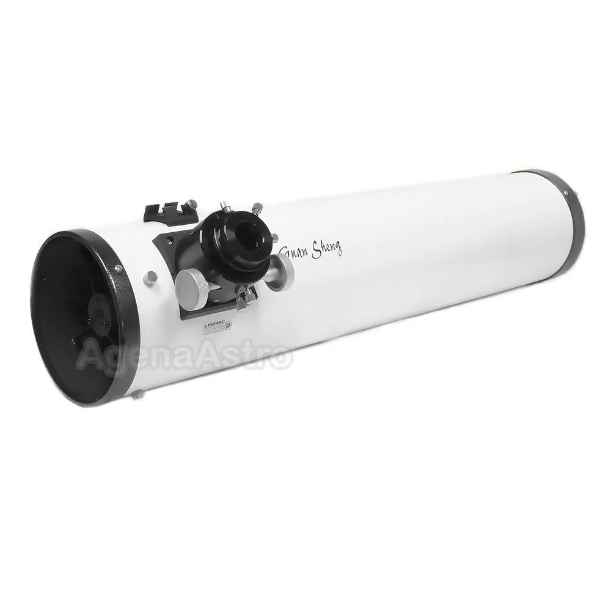
The GSO 6” f/6 Newtonian offers a very affordable avenue into astrophotography, offering an upgraded linear bearing focuser to support the weight of a typical imaging train and accessories. While the GSO 6” Newtonian is still considered a bit widefield for galaxy season, the 900mm focal length will be more than enough to capture larger targets such as the Whirlpool Galaxy, the Sunflower Galaxy, Bodes Galaxy and the Cigar, and many others as well as massive galaxy clusters such as Markarian’s Chain. This scope can serve you year-round at an incredible price point!
- Focal Length: 900mm
- f/ratio: f/6
- Weight: 14lbs
- Current Price: $339.00
Celestron NexStar SE Schmidt-Cassegrain Telescopes
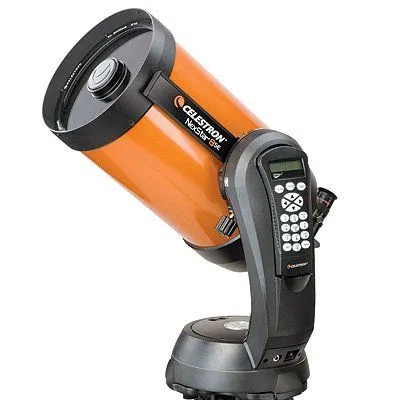
The Celestron NexStar SE telescopes are some of the most popular entry level telescopes thanks to the included altazimuth fork mount, featuring go-to capability allowing you to align the mount with the night sky and then simply telling the mount what target to slew to. The computerized mount will track the object through the sky and allow for brief exposures for those looking to capture images. Since an equatorial mount is ideal for astrophotography, the Celestron NexStar SE optical tube assembly can simply be removed in the future and placed onto another mount to allow for long exposure imaging. The NexStar SE is available with a 4-, 5-, 6-, or 8-inch primary mirror, offering flexible pricing and focal lengths to best suit your needs.
- Focal Length: 1325mm (4”), 1250mm (5”), 1500mm (6”), 2032mm (8”)
- f/ratio: f/12.99 (4”), f/10 (5”, 6”, 8”)
- Weight (OTA only): 11lbs (4”) - 24lbs (8”)
- Current Price: $679.00 (4”) - $1,599 (8”)
3.2 Advanced Telescopes for Galaxy Season
Celestron EdgeHD Schmidt-Cassegrain Telescopes
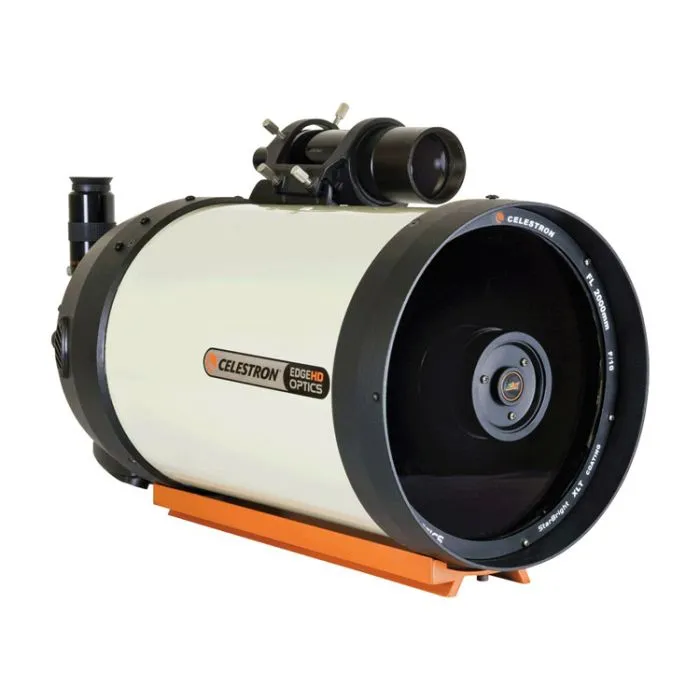
The Celestron EdgeHD Schmidt-Cassegrain telescopes can be considered the more advanced versions of the previously discussed NexStar SE lineup and are available in 8-, 9.25-, 11-, and 14-inch models. While both are a Schmidt-Cassegrain design, the EdgeHD includes an additional corrector plate at the front of the optical tube assembly to provide an imaging field more than 3 times flatter than the standard Schmidt-Cassegrain design. This helps to ensure sharper stars across the full field of view. To make this design even more attractive, the EdgeHD lineup can be used at the native focal length for lunar and planetary imaging, paired with a Celestron reducer for faster light collection on galaxies, or transformed into a truly fast wide-field telescope with the use of third-party add-ons such as the Starizona HyperStar. The Celestron EdgeHD is about as close as you can get to an “all-in-one” telescope design.
- Focal Length: 2032mm (8”), 2350mm (9.25”), 2800mm (11”), 3910mm (14”)
- f/ratio: f/10
- Weight: 14lbs (8”), 21lbs (9.25”), 28lbs (11”), 46lbs (14”)
- Current Price: $1,599 (8”) - $7,499 (14”)
GSO 8" f/8 Ritchey-Chretien Astrograph Telescope
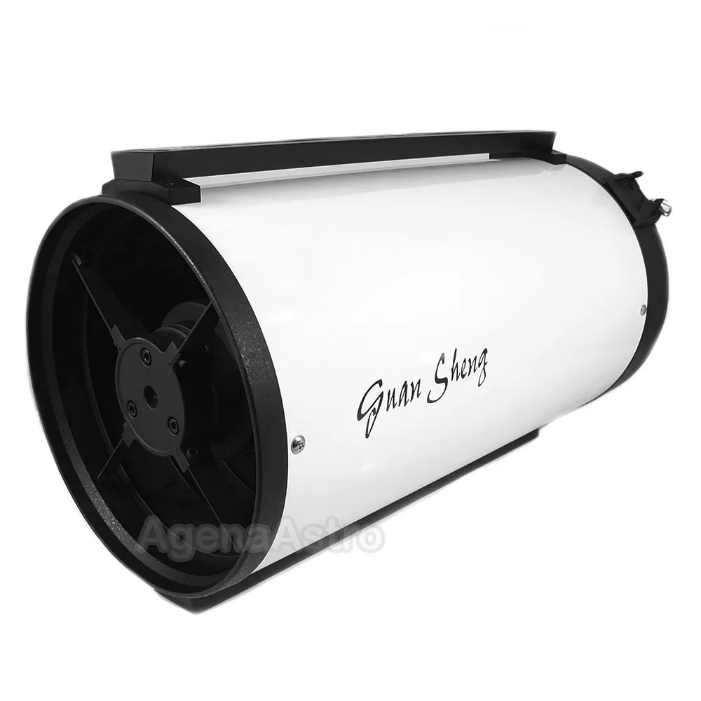
Guan Sheng Optical (GSO) has brought the famous Ritchey-Chretien Astrograph design to a very modest price point when compared to similar RC telescopes. The Ritchey-Chretien design is well known amongst serious astronomers and astrophotographers due to its ability to eliminate coma, allowing for a fuller field of view compared to more conventional configurations. The precisely ground hyperbolic primary and secondary mirrors also help to eliminate chromatic aberrations which are found in many Newtonian reflector and Schmidt-Cassegrain designs. At 1600mm focal length and only 18lbs, the GSO 8” Ritchey-Chretien is an excellent choice for galaxy season!
- Focal Length: 1600mm
- f/ratio: f/8
- Weight: 18lbs
- Current Price: $1,149.00
*Please note that prices and inventory are subject to manufacturer supply and pricing and therefore subject to change at any time*